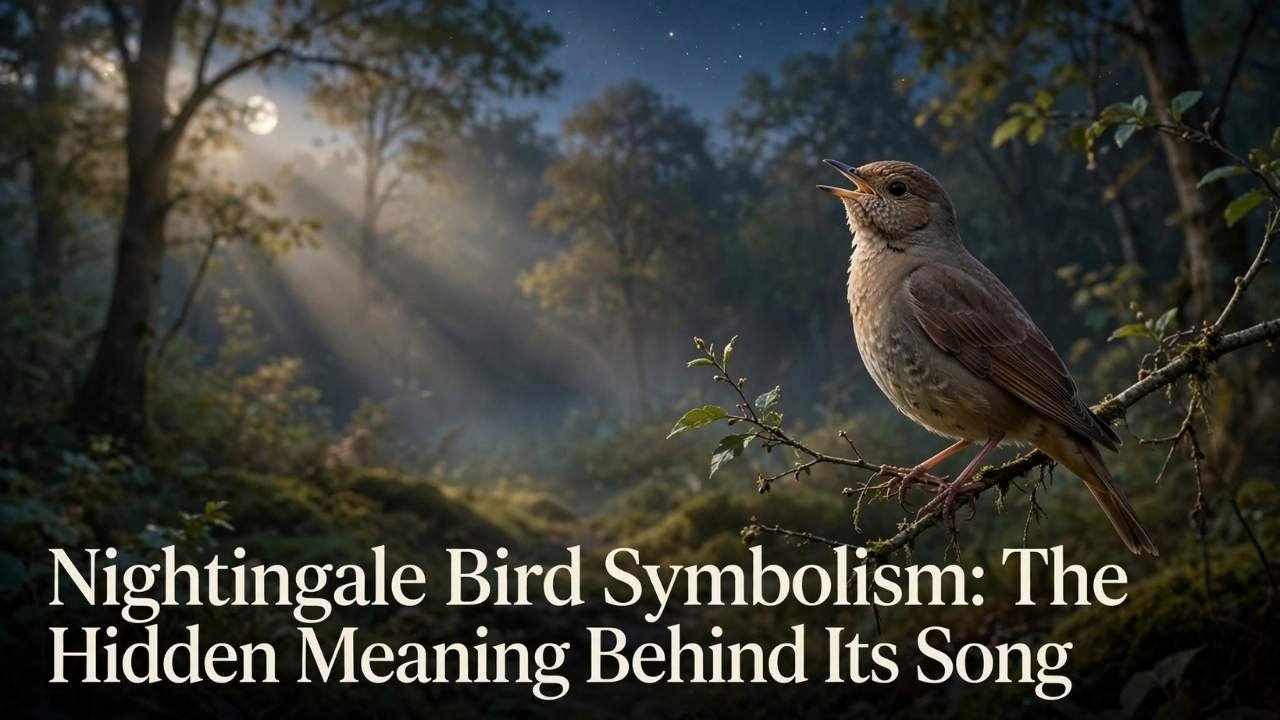
Have you ever heard a nightingale singing in the darkness and wondered what this small bird means? The nightingale has a simple appearance, but its beautiful voice has inspired people for centuries. Nightingale bird symbolism often connects this songbird with love, longing, hope, healing, creativity, and emotional expression.
Because the nightingale sings at night, many people also see it as a symbol of beauty in darkness and hope during difficult times. So, what does a nightingale symbolize? The answer depends on the culture and situation. In poetry, it can represent a lover or a poet’s muse.
In spiritual traditions, it can represent the soul, inner voice, or divine love. In dreams and tattoos, the nightingale meaning can reflect personal feelings, healing, freedom, or the need to express yourself.
Quick Answer
Nightingale bird symbolism represents love, longing, hope, emotional expression, creativity, and healing. Its beautiful song in the darkness also symbolizes finding your voice, inner strength, and hope during difficult times.
What Does a Nightingale Symbolize?
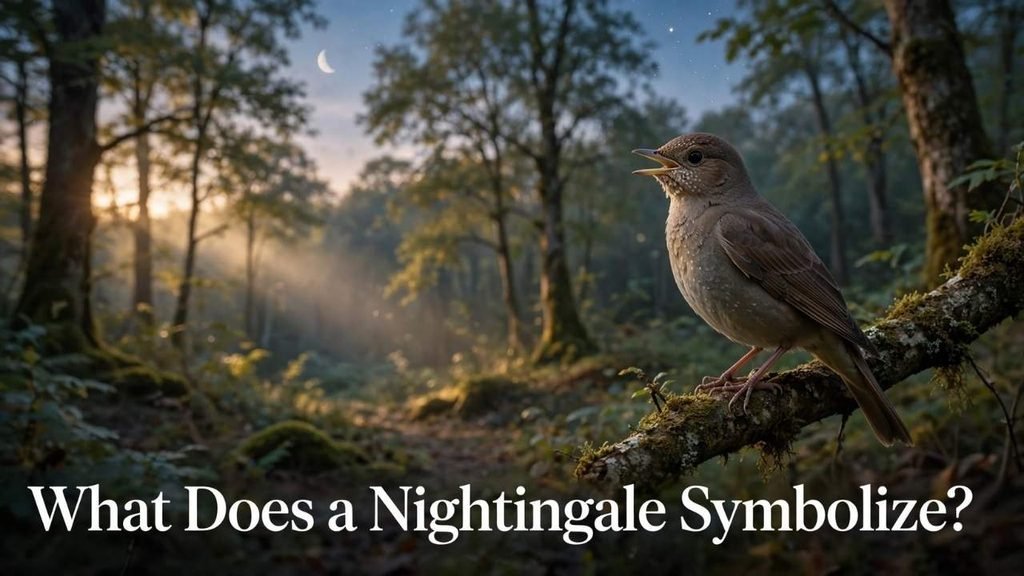
The nightingale symbolizes several powerful ideas, but love and longing remain among its strongest meanings. Its beautiful song can express feelings that people struggle to say aloud. For this reason, the bird often represents emotional expression, devotion, desire, and deep romantic love.
It can also symbolize hope, especially because it sings during the quiet darkness of night. Another important nightingale symbolic meaning involves finding your voice. The bird stays hidden while its song fills the night, which makes it a strong image of self-expression and speaking your truth.
People also connect it with healing, resilience, transformation, creativity, and inspiration. In spiritual settings, the nightingale can represent inner wisdom, spiritual longing, awakening, and connection with the divine. Its symbolism can therefore feel both joyful and sad, showing how love, loss, beauty, and hope can exist together.
Why Is the Nightingale Such a Powerful Symbol?
The nightingale became a powerful symbol because its voice seems much greater than its appearance. This small brown bird does not look unusual, yet its rich song can fill a quiet woodland. That contrast gives the bird a strong symbolic meaning. It reminds us that inner beauty can matter more than outward appearance.
The nightingale also sings during the night, when most birds remain quiet. People naturally connect this behavior with hope in darkness, hidden feelings, and a voice that refuses to disappear. You may not see the bird, but you can clearly hear it. This creates the idea of being heard even when you feel unseen.
For this reason, nightingale symbolism often represents authentic expression, quiet strength, emotional courage, creativity, and resilience. Its song turns darkness into something beautiful.
Nightingale Symbolism in Love and Relationships
In love, the nightingale symbolizes deep emotion, longing, and devotion. Poets and storytellers have used its song to express feelings that lovers cannot easily share. The bird can represent someone who loves deeply but remains separated from the person they desire. This makes nightingale symbolism in love especially strong when people experience distance or unrequited love.
The bird can also represent passionate love and emotional honesty. Its song becomes a way to express the heart without needing physical closeness. In this sense, the nightingale represents a love that can survive separation.
At the same time, its meaning does not always feel happy. The bird can symbolize love and loss, yearning, sorrow, and bittersweet beauty. When people connect with the nightingale during difficult relationships, they may see its song as a reminder to express their feelings rather than hide them.
Nightingale and Rose Symbolism
The nightingale and rose share one of the best-known symbolic relationships in poetry, especially in Persian literature. In this tradition, the nightingale often represents the lover, while the rose represents the beloved. The bird sings to the rose because it feels deep love and longing for it.
This relationship gives the rose and nightingale meaning beyond simple romance. The nightingale may represent desire, devotion, separation, and the search for something beautiful but difficult to reach. Persian poets also used the pair to describe spiritual love, where the lover seeks closeness to the divine.
The rose can therefore represent beauty or the beloved, while the nightingale represents the yearning soul. This symbolism later influenced other forms of Persian, Urdu, and Middle Eastern poetry. Together, the two create a powerful image of love, longing, beauty, and spiritual desire.
Nightingale Symbolism in Greek Mythology
The nightingale in Greek mythology carries a darker and more complex meaning. Its story connects with Philomela, Procne, and Tereus, whose tale involves violence, grief, transformation, and suffering. Different versions of the myth vary, but the story became closely linked with the idea of a person losing their voice and later finding a way to express their pain.
Because of this connection, the nightingale can symbolize grief, survival, transformation, and the power of expression after silence. Its song can represent a voice that continues despite suffering. This meaning adds an important layer to nightingale symbolism. The bird does not only represent romance or beauty. It can also represent the strength to speak after hardship.
Modern readers should treat the myth with care rather than romanticizing its violence. At its heart, the story shows how voice, memory, and survival can remain powerful even after deep suffering.
Nightingale Symbolism in Persian Culture and Literature
Persian culture gives the nightingale a special place in poetry and literature. Persian poets often call the nightingale bulbul and connect it with the rose. The bird usually acts as the lover, while the rose represents the beloved. Through this image, poets explore love, longing, beauty, separation, and desire.
The symbolism can also reach beyond human romance. In mystical poetry, the nightingale may represent the soul longing for divine love. Its constant song expresses a deep desire to reach something beautiful and higher than itself. This tradition helped spread nightingale symbolism across Persian and wider Middle Eastern literature.
Similar images later appeared in Urdu poetry and other literary traditions. As a result, the nightingale became more than a songbird. It became a symbol of the yearning heart, the devoted lover, the searching soul, and the poet who turns deep emotion into song.
Nightingale Symbolism in Literature and Poetry
Writers have used the nightingale as a powerful symbol because its song carries strong emotional meaning. In literature and poetry, the bird often represents love, imagination, beauty, longing, and creative inspiration. Writers can use its voice to express feelings that ordinary words cannot fully capture.
William Shakespeare used the nightingale in works such as Romeo and Juliet, where its song helps create a contrast between night and day. John Keats gave the bird an even deeper role in Ode to a Nightingale, connecting it with beauty, imagination, sorrow, and the limits of human life.
The nightingale also appears in Hans Christian Andersen’s The Nightingale, where its natural song carries more value than artificial beauty. Across these works, the bird becomes a poet’s muse and a symbol of authentic expression. Its voice reminds writers that true beauty does not need to appear perfect.
The Spiritual Meaning of the Nightingale
The spiritual meaning of a nightingale often centers on the inner voice, hope, awakening, and emotional healing. Because the bird sings in darkness, many spiritual interpretations view it as a reminder that light and beauty can exist during difficult periods. Its song can encourage people to keep expressing themselves when life feels uncertain.
Some traditions also connect the nightingale with divine love, spiritual longing, intuition, and the soul’s search for a higher purpose. In Baha’i writings, the nightingale carries important spiritual and poetic meaning, especially through the image of the Nightingale of Paradise.
A modern spiritual interpretation may also see the bird as a guide toward self-expression and personal growth. However, spiritual symbolism does not have one universal meaning. Your experience, beliefs, and circumstances can shape what the nightingale represents to you.
Nightingale Symbolism in Dreams
A nightingale dream meaning often relates to emotions, communication, love, or hope. Hearing a nightingale sing in a dream may suggest a desire to express your feelings or speak your truth. It can also represent comfort, inspiration, or hope during a difficult period.
Seeing a singing nightingale may carry a positive meaning, while a silent or trapped nightingale can suggest feelings of being unable to communicate. An injured bird may represent emotional pain, while a flying nightingale can suggest freedom, healing, or emotional release.
A dream involving a rose and nightingale may connect with love, longing, or devotion. Multiple nightingales could reflect strong emotions or important relationships. However, dream symbolism does not provide fixed predictions about the future. Personal experiences shape dreams, so use these interpretations as possible symbols, not proven facts.
Nightingale as a Spirit Animal, Totem, or Power Animal
The nightingale spirit animal often represents self-expression, courage, intuition, and emotional strength. If you connect with this bird as a spiritual guide, its message may encourage you to trust your inner voice and share what you truly feel. The nightingale does not need to show itself to make its presence known, which makes it a strong symbol of quiet confidence.
As a nightingale totem, the bird can represent creativity, emotional honesty, and the ability to find beauty during hard times. A nightingale power animal may also symbolize resilience when you face loss, fear, or change. Its song reminds you that your voice has value, even when others do not notice you.
These meanings come from spiritual and symbolic traditions rather than science. For many people, the nightingale simply offers a meaningful image of hope, healing, freedom, and finding your voice.
What Does Seeing or Hearing a Nightingale Mean?
Seeing or hearing a nightingale can feel special because people rarely see this bird as easily as they hear it. Traditionally, hearing its beautiful song may symbolize hope, love, renewal, and emotional expression. Since the bird often sings at night, people may also connect its voice with hope in darkness.
If you hear a nightingale during spring, you might associate it with new beginnings, rebirth, and renewal. Some spiritual beliefs treat an unexpected encounter as a personal sign or message. However, there is no scientific proof that hearing a nightingale predicts a specific event.
The meaning can simply come from the moment itself. Its song may remind you to slow down, listen, and appreciate beauty. In symbolic terms, a nightingale can encourage you to trust your voice, express hidden feelings, and keep hope alive during difficult times.
Nightingale Tattoo Meaning and Symbolism
A nightingale tattoo can carry several personal meanings. Many people choose this bird to represent love, freedom, hope, healing, creativity, or self-expression. Because the nightingale sings at night, the design can also symbolize finding light in darkness or staying strong during difficult periods.
A nightingale paired with a rose often represents romantic love, longing, or devotion. A moon and nightingale tattoo can highlight mystery, dreams, and the bird’s connection with nighttime. A caged nightingale may represent a lost voice or the desire for freedom.
Adding musical notes or flowers can emphasize creativity, beauty, and emotional expression. The best nightingale tattoo meaning depends on the design and the person wearing it. Some people choose the bird because it reminds them to speak their truth, while others connect it with someone they love, a period of healing, or a personal journey.
Nightingale Symbolism in Art, Music, and Modern Culture
The nightingale has inspired art, music, poetry, books, and modern creative work for centuries. Artists often use the bird to show beauty, emotion, nature, love, and imagination. Its song gives musicians and writers a natural image for creative expression.
In music and poetry, the nightingale can act as a muse that inspires people to create. Its voice also represents the idea of making something beautiful without needing attention or praise. Modern artists may use the bird to express freedom, healing, emotional honesty, or resilience.
You can also find nightingale imagery in tattoos, jewelry, paintings, home décor, and book covers. The symbol remains popular because people can give it a personal meaning. For one person, it may represent romantic love. For another, it may represent creativity or hope. This flexibility keeps nightingale symbolism relevant in modern culture.
Florence Nightingale and the Symbolism of the Name
Florence Nightingale shares her surname with the famous songbird, but her connection to nightingale symbolism comes mainly from her name rather than from the bird itself. Florence Nightingale became famous for her work in nursing, care, and public health. People often remember her with the image of a lamp, which represents service, care, and compassion.
This creates an interesting second meaning around the word “nightingale.” The bird can symbolize healing, hope, and comfort, while Florence Nightingale represents these ideas through her work. However, we should not confuse Florence Nightingale symbolism with the traditional symbolism of the bird.
They come from different sources. The shared name simply creates an interesting connection between the songbird and ideas such as care, service, compassion, and healing. Understanding this difference helps keep the history of nightingale bird meaning clear while still showing why the name has such a strong cultural association.
Nightingale Symbolism Across Cultures
The meaning of the nightingale changes across cultures, although several themes appear again and again. In Greek mythology, the bird connects with grief, transformation, and the survival of the voice. In Persian poetry, it represents the lover who longs for the rose. Western literature often uses the nightingale to explore love, beauty, imagination, and sorrow.
Christian interpretations can connect the bird with prayer, devotion, and spiritual hope, although these meanings vary by tradition. Baha’i symbolism gives the nightingale an important place in spiritual poetry and connects it with divine love and longing.
Modern spiritual beliefs often describe the nightingale as a symbol of intuition, healing, self-expression, and hope.
These meanings show that there is no single universal definition. Instead, the bird has gathered different meanings over time while keeping its central connection with song, emotion, love, and longing.
How Nightingale Symbolism Has Changed Over Time
Nightingale symbolism has changed as different cultures and writers gave the bird new meanings. Ancient stories connected the bird with myth, grief, transformation, and the human voice. Persian poets later made the nightingale a famous symbol of love, longing, and spiritual desire, especially through its relationship with the rose.
During the Romantic period, writers such as John Keats used the nightingale to explore beauty, imagination, sorrow, nature, and mortality. Fairy tales also presented the bird as a symbol of natural beauty and a voice that artificial things cannot replace.
Today, people often give the nightingale a more personal meaning. It can represent finding your voice, emotional healing, freedom, creativity, and hope during dark times. This change shows how symbols grow with culture. The bird keeps its old meanings while gaining new ones that reflect modern ideas about identity and emotional expression.
The Natural History Behind the Symbolism
The common nightingale, scientifically known as Luscinia megarhynchos, is a small songbird with a fairly plain appearance. Its brown feathers do not attract as much attention as its remarkable voice. This contrast helps explain why people developed such strong nightingale symbolism.
The male nightingale is especially famous for its rich and powerful song, which it uses during the breeding season. It can sing both during the day and at night, although its nighttime song has made it particularly famous. The bird often stays hidden among thick plants, so people may hear the nightingale before they see it.
This natural behavior gives the bird much of its symbolic power. A hidden bird with a strong voice easily becomes an image of inner beauty, hidden feelings, self-expression, and quiet strength. Understanding the real animal makes the symbolic meaning feel more natural and easier to understand.
Nightingale Conservation and the Meaning of a Disappearing Song
The nightingale’s symbolism becomes even more meaningful when we consider the real bird’s future. Nightingales depend on suitable woodland, scrub, and thick vegetation for nesting and feeding. Changes in land use and habitat can reduce the places where these birds can live and sing.
When nightingales disappear from an area, people lose more than a beautiful sound. They also lose a living part of local nature, culture, literature, and folklore. The phrase “a disappearing song” therefore carries both an ecological and emotional meaning. Protecting suitable habitats can help support nightingale populations.
Conservation groups work to improve woodland conditions and protect important habitats for wildlife. This reminds us that nightingale symbolism should not exist only in books, tattoos, or poems. The real bird also needs protection. If we value the nightingale as a symbol of beauty and hope, we should also value the living bird that inspired those meanings.
Common Misconceptions About Nightingale Symbolism
People often treat nightingale symbolism as if the bird has one fixed meaning, but that is not true. Its symbolism changes across cultures, religions, stories, and personal experiences. The nightingale does not always represent sadness, and it does not always symbolize romantic love.
Another common mistake involves its song. People sometimes assume that only the female nightingale sings, but the famous song usually comes from the male bird, especially during breeding season. It is also important to separate spiritual beliefs from scientific facts. A nightingale encounter may feel meaningful, but it does not scientifically predict future events.
Finally, people sometimes connect every nightingale reference with Florence Nightingale. Her name creates an interesting association, but her historical work and the bird’s traditional symbolism come from different sources. Understanding these differences makes the nightingale meaning more accurate and balanced.
FAQs
What does a nightingale symbolize?
A nightingale often symbolizes love, longing, hope, song, creativity, healing, and self-expression.
What is the spiritual meaning of a nightingale?
It can represent inner voice, spiritual longing, intuition, hope, awakening, and emotional healing.
What does a nightingale symbolize in love?
It commonly represents devotion, romantic love, desire, longing, and love across distance.
What does the nightingale and rose symbolize?
The nightingale often represents the lover, while the rose represents the beloved. Together, they express love, desire, and longing.
What does a nightingale tattoo mean?
A nightingale tattoo can represent freedom, creativity, healing, love, hope, or finding your voice.
What does hearing a nightingale mean spiritually?
Some traditions view it as a symbol of hope or a meaningful personal message, but such interpretations remain personal rather than scientific.
Conclusion
The nightingale bird symbolism remains powerful because this small songbird expresses ideas that people have carried across generations. Its voice connects with love, longing, hope, creativity, healing, spiritual desire, and emotional expression. Its nighttime song also gives it a special place as a symbol of beauty in darkness.
From Greek mythology and Persian poetry to Shakespeare, Keats, spiritual traditions, dreams, and modern tattoos, people continue to give the nightingale new meanings. Yet one idea appears again and again: the power of a voice that deserves to be heard.
Perhaps that explains why the nightingale still feels so meaningful today. It reminds us that something does not need to look extraordinary to have great value. Sometimes, like the nightingale, we simply need to find our voice and let it be heard.
1 thought on “Nightingale Bird Symbolism: The Hidden Meaning Behind Its Song ”