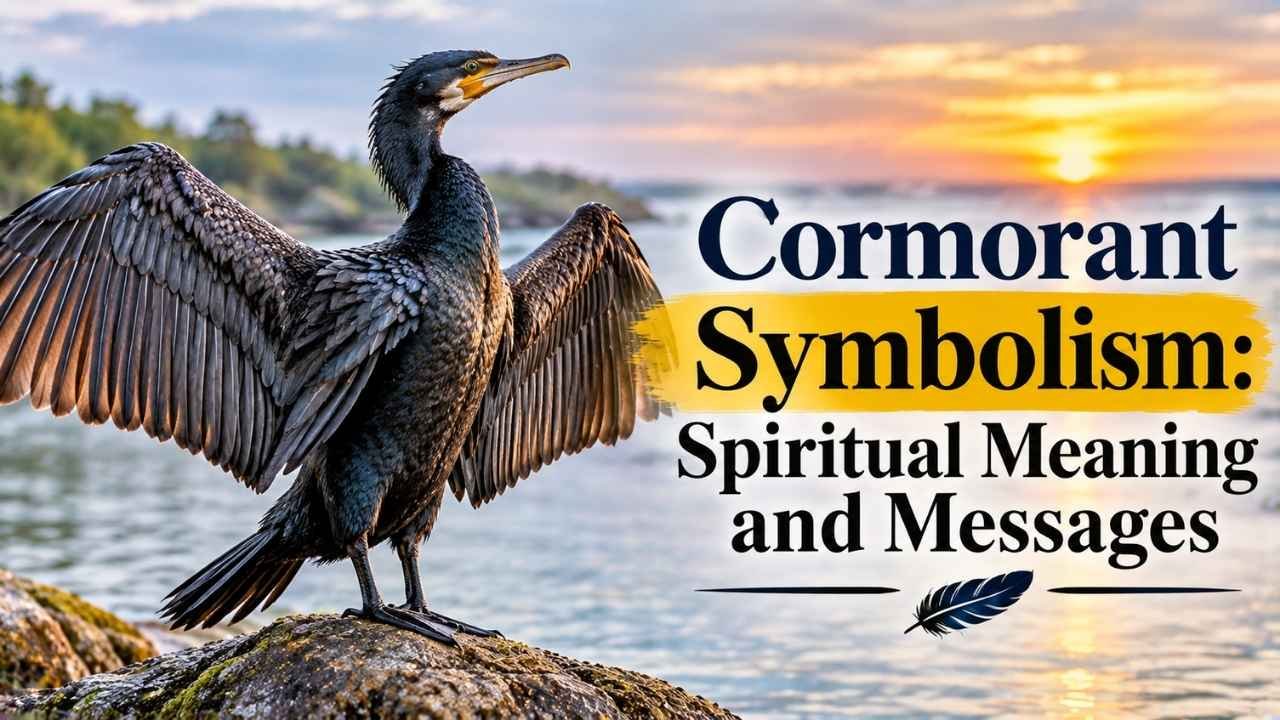
Cormorant symbolism is often associated with determination, adaptability, intuition, patience, and emotional depth. This fascinating waterbird spends much of its time diving beneath the surface to catch fish, making it a powerful symbol of exploring hidden opportunities, trusting your instincts, and staying focused on your goals. Its ability to move between water, land, and air also represents flexibility and personal growth.
In spiritual interpretations, encountering a cormorant may encourage you to look beyond appearances, understand your emotions, and recognize when you need to change direction. Its behavior also offers valuable lessons about independence, cooperation, and the importance of taking time to recover after difficult experiences.
Quick Answer
A cormorant commonly symbolizes determination, adaptability, resourcefulness, patience, intuition, and emotional depth. Its underwater diving represents exploring hidden feelings and opportunities, while its ability to find food reflects persistence and independence. Spiritually, this bird can remind you to trust your instincts, remain focused on your goals, and maintain a healthy balance between effort and rest.
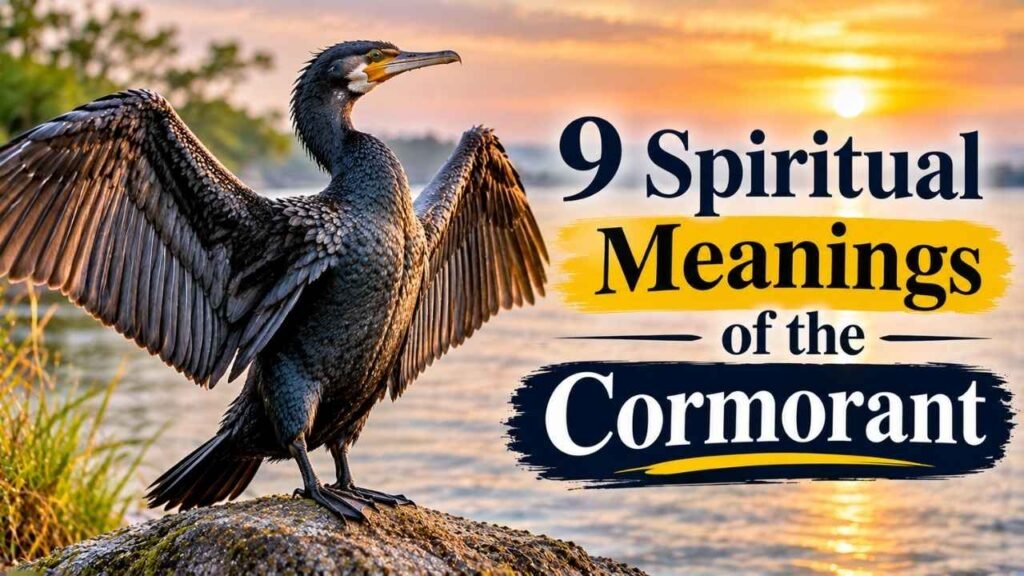
9 Spiritual Meanings of the Cormorant
Determination and Persistence
One of the strongest spiritual meanings of a cormorant is determination. This bird dives underwater and pursues fish with impressive focus, showing how persistence can help you achieve something worthwhile. As a symbolic message, the cormorant encourages you not to abandon your goals simply because progress feels slow.
Some achievements require repeated effort, patience, and a willingness to try different approaches. If you are facing a difficult situation, consider whether you need to remain committed or adjust your strategy. Persistence does not mean repeating the same mistake; it means continuing to work toward what matters.
Adaptability and Resourcefulness
Cormorants can move between different environments and use their physical abilities to find food. Their behavior makes them meaningful symbols of adaptability and resourcefulness. Spiritually, seeing a cormorant may remind you that changing circumstances do not have to prevent personal progress.
You can learn new skills, reconsider your decisions, and discover opportunities in unexpected places. This symbolism is particularly relevant when starting a new chapter in life. Instead of resisting every change, consider how you can use your existing strengths to adjust and move forward.
Intuition and Inner Wisdom
A cormorant disappears beneath the water while searching for fish, making its diving behavior a natural metaphor for exploring what lies beneath the surface. In spiritual symbolism, this represents intuition, inner awareness, and the ability to recognize things that are not immediately obvious.
The cormorant may encourage you to slow down before making important decisions. Pay attention to your feelings, examine the available information, and avoid allowing outside opinions to overpower your own judgment. However, intuition works best alongside thoughtful reasoning rather than replacing it.
Emotional Depth and Self-Discovery
Water is commonly associated with emotions, reflection, and the unconscious mind in symbolic traditions. Because cormorants spend considerable time underwater, they can represent a willingness to explore deeper emotional experiences. This interpretation may be meaningful when you are avoiding difficult feelings or struggling to understand your reactions.
The cormorant offers a reminder to acknowledge your emotions instead of hiding them. Reflecting on past experiences can help you recognize patterns, understand your needs, and develop healthier relationships. Sometimes personal growth begins when you are willing to explore what you have kept beneath the surface.
Patience and Focus
Catching fish requires a combination of timing, concentration, and movement. Cormorants demonstrate how focused effort can support survival. As a spiritual symbol, the bird represents patience and the importance of directing your attention toward meaningful priorities.
If you are waiting for an opportunity, avoid allowing frustration to control your decisions. Not every situation requires immediate action. For example, when working toward a career goal, developing a skill consistently may be more valuable than rushing into an opportunity for which you are not prepared.
Balance, Rest, and Renewal
One of the most recognizable cormorant behaviors is standing with its wings spread after fishing. This posture is associated with drying its feathers. Symbolically, this behavior offers an interesting lesson about rest and renewal. Making an effort is important, but recovering afterward also matters.
You may be working hard toward a personal or professional goal while overlooking your need for rest. The cormorant encourages you to recognize when you need to pause and regain your energy. Taking a break does not mean abandoning your responsibilities. It can help you return with better concentration and motivation.
Independence and Self-Reliance
Cormorants are capable fish hunters that use their natural abilities to obtain food. This behavior can represent independence, confidence, and personal responsibility. Spiritually, the cormorant may remind you to recognize your abilities instead of constantly depending on other people’s approval. If you are facing an important decision, take responsibility for understanding your options and choosing a direction. However, independence should not become isolation. Knowing when to ask for advice or support is also a sign of strength.
Cooperation and Community
Although cormorants are skilled individual hunters, many species also gather in groups and form breeding colonies. This creates another important symbolic interpretation: cooperation and community. The cormorant reminds you that personal success and meaningful relationships do not have to compete with each other. Working with others can provide encouragement, shared knowledge, and opportunities that may be difficult to achieve alone. If you have been trying to handle every responsibility yourself, consider whether collaboration could make your situation easier.
Abundance and Sustenance
Because cormorants depend heavily on fish for food, their fishing behavior can represent finding nourishment, recognizing opportunities, and making practical use of available resources. In spiritual interpretations, this may connect with abundance and the ability to meet your needs through consistent effort.
Rather than viewing abundance only in terms of money, consider the other things that support a fulfilling life, such as meaningful relationships, knowledge, good opportunities, and emotional well-being. The cormorant’s message is to recognize what sustains you and make thoughtful use of what is available.
Cormorant Spirit Animal Meaning
The cormorant spirit animal is commonly associated with people who value independence, persistence, adaptability, and self-discovery.
As a symbolic guide, it represents the ability to explore unfamiliar situations while remaining focused on important goals.
People who identify with cormorant symbolism may recognize qualities such as:
- Determination: Continuing despite temporary difficulties.
- Intuition: Paying attention to inner feelings and observations.
- Adaptability: Adjusting when circumstances change.
- Independence: Taking responsibility for personal decisions.
- Resourcefulness: Finding practical solutions to challenges.
However, the cormorant also represents the importance of recognizing personal limitations. Being determined does not mean working continuously, and being independent does not mean refusing help. Its deeper lesson is to combine confidence with self-awareness.
What Does Seeing a Cormorant Mean Spiritually?
Seeing a cormorant can have different personal meanings depending on where you encounter it and what is happening in your life.
Seeing a cormorant unexpectedly: You might interpret the encounter as a reminder to stay focused and recognize opportunities that are not immediately obvious.
Seeing a cormorant near water: This may encourage emotional reflection, patience, and a closer understanding of your feelings.
Seeing a cormorant repeatedly: Consider whether themes such as independence, persistence, or the need for rest are especially relevant to your current circumstances. Repeated sightings do not automatically indicate a supernatural message.
Seeing multiple cormorants together: You might connect this experience with cooperation, community, and the importance of supportive relationships.
For a practical interpretation, ask yourself three questions: What was I thinking about when I saw the bird? What challenge am I currently facing? Which quality of the cormorant feels most relevant to my situation?
Cormorant Symbolism in Dreams
Dreaming about a cormorant can be interpreted in several ways, depending on the bird’s behavior and the emotions you experienced.
- A diving cormorant: May represent exploring hidden feelings or looking for answers to an unresolved problem.
- A cormorant catching fish: Could symbolize pursuing opportunities and working toward something meaningful.
- A flying cormorant: May represent independence, freedom, or a desire to move beyond current limitations.
- A cormorant spreading its wings: Could reflect a need for rest, recovery, and emotional balance.
- An injured cormorant: Might symbolize vulnerability, exhaustion, or concerns about your ability to overcome a challenge.
Dream meanings are subjective. Your personal experiences, emotions, and memories are more important than treating any interpretation as a fixed prediction.
Cultural and Historical Symbolism of Cormorants
Cormorants have different associations across historical traditions, and their symbolism is not universally positive. In parts of Europe, cormorants have historically been associated with fishing and competition over fish resources. They were also used in traditional fishing practices in which trained birds helped fishermen catch fish.
European literature and religious imagery sometimes portrayed the cormorant negatively, connecting it with greed and even Satan. For example, John Milton used the image of a cormorant in Paradise Lost when depicting Satan entering Eden. These historical interpretations show why the bird can represent different things depending on cultural and literary context. Its natural behavior should not be confused with the human qualities that people have historically projected onto it.
What Can the Cormorant Teach You?
The cormorant offers several practical lessons that can be applied to everyday life:
- Look beneath the surface: Understand a situation before making assumptions.
- Stay committed: Continue working toward meaningful goals.
- Adapt to change: Be willing to explore different approaches.
- Respect your limits: Give yourself time to rest and recover.
- Trust your judgment: Consider your instincts alongside reliable information.
- Value relationships: Recognize when cooperation can help you succeed.
For example, if you are experiencing a difficult period at work, the cormorant’s symbolism can encourage you to examine the real problem, adjust your approach, and avoid exhausting yourself in the process.
FAQ’S
Is a cormorant a good omen?
In modern spiritual interpretations, a cormorant is often viewed positively because it represents determination, adaptability, patience, and resourcefulness. However, its meaning depends on personal beliefs and cultural context.
What does a cormorant symbolize spiritually?
A cormorant commonly symbolizes persistence, intuition, emotional depth, independence, and balance. Its diving behavior is often interpreted as a metaphor for exploring hidden opportunities and feelings.
What does a cormorant spirit animal represent?
The cormorant spirit animal represents determination, self-reliance, adaptability, and inner awareness. It also encourages people to balance independence with cooperation and rest.
What does seeing a cormorant near water mean?
Symbolically, seeing a cormorant near water may represent emotional reflection, patience, and self-discovery. Your personal circumstances can influence how you interpret the encounter.
What does a cormorant symbolize in dreams?
A cormorant in a dream may represent persistence, hidden emotions, personal exploration, or the search for opportunities. The bird’s behavior and your feelings during the dream can influence its personal interpretation.
Conclusion
Cormorant symbolism offers meaningful lessons about determination, adaptability, intuition, emotional depth, and personal growth. Its ability to dive beneath the water represents exploring what lies beyond the surface, while its fishing behavior reflects focus and resourcefulness.
Perhaps its most valuable lesson is the importance of balancing effort with recovery. Just as the cormorant returns to an exposed perch after fishing, you also need time to regain your strength and prepare for new challenges. Whether you encounter this bird in nature or explore its meaning through dreams, its symbolism can encourage you to remain persistent, trust your judgment, and approach life’s changes with patience and confidence.