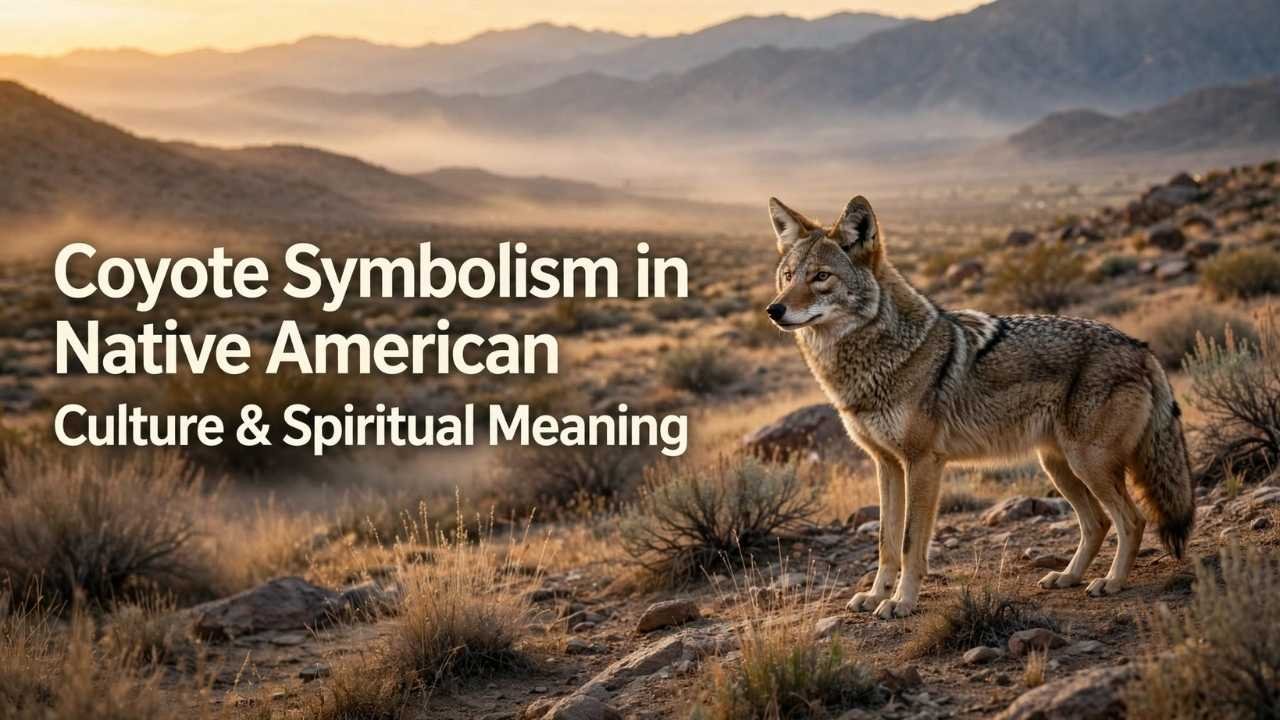
Coyote symbolism in Native American culture has deep roots in Indigenous stories, folklore, and traditional teachings. In many stories, Coyote appears as a clever trickster who uses humor, curiosity, and unexpected actions to shape events. Some traditions also connect Coyote with creation, change, and lessons about human behavior.
But what does a coyote symbolize, and why does this animal play such an important role in Native American mythology? The answer depends on the specific Indigenous nation and its cultural traditions. Diné, Lakota, Apache, and other communities have their own stories and beliefs about Coyote. Exploring these traditions helps us understand the coyote’s cultural significance while respecting the differences between Indigenous nations.
Quick Answer
Coyote symbolism in Native American culture often connects with cleverness, trickery, humor, creation, and lessons about human behavior. In some Indigenous traditions, Coyote acts as a trickster who challenges rules and learns through mistakes. Other stories give Coyote a role in shaping the world. The meaning depends on the specific nation, story, and cultural context.
What Does Coyote Symbolism Mean in Native American Culture?
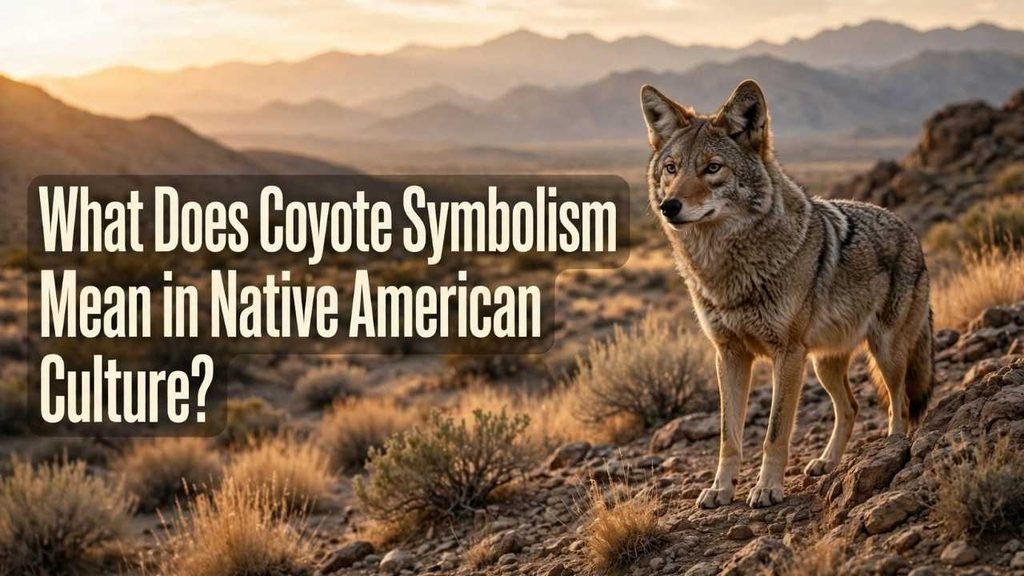
Coyote plays several roles in Indigenous mythology and folklore. In some traditional stories, Coyote uses clever thinking to solve problems or gain an advantage. In others, pride, greed, or careless choices lead to trouble. These different roles make Coyote a complex character rather than a simple symbol of good or evil.
Coyote symbolism can include cleverness, humor, change, and the consequences of one’s actions. Some stories also connect Coyote with creation or the origins of natural features. These meanings depend on the tradition behind each story. When exploring what the coyote symbolizes in Native American culture, it is important to consider the specific community rather than treating all Indigenous beliefs as the same.
The Coyote as a Trickster in Indigenous Stories
Coyote is best known as a trickster figure in many Indigenous stories. A trickster often uses clever ideas, jokes, and unexpected actions to change a situation. Coyote may fool other characters, break rules, or try to gain something for himself. However, his plans do not always work. Sometimes, his own pride or greed creates problems.
These stories use humor to explore human behavior and show what can happen when people act without thinking. Coyote may appear wise in one story and foolish in another. This contrast makes the character interesting and helps readers understand the results of different choices. Still, each Indigenous nation has its own storytelling traditions, so Coyote’s role can change from one culture to another.
Coyote in Diné (Navajo) Culture
In Diné (Navajo) culture, Coyote, known as Mąʼii, appears in traditional stories connected with creation, change, and the order of the world. Some Diné emergence stories describe Coyote as a powerful figure whose actions affect the course of events. His role can be complex because his choices may bring change while also creating problems.
These stories are part of a wider cultural tradition, not simply tales about an animal. They connect with Diné understandings of the world, human behavior, and the results of certain actions. To understand Coyote symbolism in Navajo mythology, readers should look at the meaning of each story within its own setting. Diné traditions are distinct, and their teachings should not be treated as identical to those of other Indigenous nations.
Coyote and Trickster Traditions in Lakota Culture
Coyote also appears in stories associated with Lakota culture, where traditional tales can explore behavior, choices, and their consequences. These stories may use humor and unexpected events to show how people create problems through carelessness or poor judgment. Coyote’s actions can encourage listeners to think about responsibility and the effects of their decisions.
It is important, however, to distinguish Coyote from Iktomi, the spider trickster found in Lakota storytelling. Although both figures can appear in stories that examine human behavior, they are not the same character. The Lakota word Šuŋgmánitu is associated with coyote, but cultural meanings depend on the particular account. Studying Lakota stories on their own helps readers understand their lessons without mixing them with other Indigenous traditions.
Coyote in Apache and Other Indigenous Stories
Coyote appears in various Indigenous storytelling traditions, including some Apache traditions. His role can change depending on the community and the story. In one tale, Coyote may act cleverly to overcome a challenge. In another, his selfish choices or careless behavior may lead to trouble. These differences show why Native American coyote folklore cannot be reduced to one simple meaning.
When exploring Coyote symbolism in Apache stories, it is best to use sources that identify the community and explain the story’s background. A story from one nation should not automatically represent another nation’s beliefs. Some tales may explain natural events, while others focus on relationships, choices, or humor. By studying each account carefully, readers can appreciate the variety of Indigenous storytelling and the cultural knowledge these stories preserve.
Coyote as a Creator and Transformer
Some Indigenous creation stories give Coyote a role in shaping the world or changing how things work. Depending on the tradition, Coyote may help bring about important events, affect the natural world, or influence the way life unfolds. These accounts contribute to Coyote creation mythology, but they do not mean every Indigenous nation sees Coyote as a creator.
Coyote’s role as a transformer can also connect with the results of unexpected actions. A character may try to achieve one goal but cause something different to happen. This pattern makes Coyote stories useful for exploring change, choice, and uncertainty. To understand Coyote in Indigenous creation stories, readers should look at the details and cultural setting of each account instead of applying one meaning to all traditional narratives.
Famous Coyote Stories and the Lessons They Teach
Traditional Coyote stories often combine unusual events with lessons about behavior. Some tales describe Coyote trying to outsmart another character, while others show what happens when he acts from greed or pride. These stories can entertain listeners while encouraging them to think about their own choices. Their lessons depend on the story and the community that shares it.
When discussing Native American Coyote stories, it is important to identify the source and avoid combining different versions into one account. A useful explanation should briefly describe what happens, identify the relevant Indigenous tradition, and explain the lesson the story may offer. Some stories focus on cleverness, while others reveal the limits of cleverness. Together, properly attributed tales show why Coyote remains an important and complex figure in Indigenous folklore.
What Coyote Teaches About Human Behavior
Coyote stories often explore familiar human weaknesses, including greed, pride, dishonesty, and impatience. A character may believe that cleverness guarantees success, only to discover that a careless choice can cause harm. Through these events, Coyote symbolism and human behavior become closely linked. The stories invite listeners to consider how their actions affect themselves and others.
The lessons are not always simple rules about right and wrong. Humor can make a mistake easier to discuss, while an unexpected ending can challenge what listeners assume will happen. Some stories may encourage humility or careful thought, but the lesson depends on the account. By examining Coyote’s choices and their results, readers can better understand how traditional stories explore responsibility, relationships, and the consequences of human behavior.
Coyote Symbolism Across Different Indigenous Nations
Coyote symbolism across Indigenous nations includes different stories, roles, and cultural meanings. Some traditions connect Coyote with creation, while others focus on trickery, humor, or lessons about behavior. Even when two communities share a similar kind of story, the details and meaning may differ. These differences reflect the histories, languages, and teachings of individual nations.
For example, Diné accounts of Coyote belong to Diné cultural traditions, while Lakota stories have their own setting and characters. Apache traditions also include distinct accounts that deserve careful study. Readers should avoid saying that all Native American tribes believe the same things about Coyote. A stronger understanding comes from listening to Indigenous sources and identifying the nation behind each story. This approach makes discussions of Native American coyote mythology more accurate and respectful.
How Coyote Stories Preserve Cultural Knowledge
Indigenous oral traditions help communities pass stories, knowledge, and values from one generation to another. Coyote stories can form part of this wider tradition, sharing ideas about human behavior, relationships, and the natural world. Storytelling may also use humor, memorable characters, and surprising events to help listeners remember important details.
These stories are more than simple entertainment. Their meaning can depend on the storyteller, the community, and the setting in which people share them. Some stories may have specific cultural rules about when or how people tell them. Readers should respect those differences rather than assuming every traditional story is meant for unrestricted use. Learning about Coyote through reliable Indigenous sources helps preserve the story’s context and gives a clearer picture of its place in cultural knowledge.
Cultural Respect and the Meaning of Traditional Stories
When learning about Coyote symbolism in Native American culture, cultural respect matters as much as understanding the stories. Indigenous nations have their own languages, histories, beliefs, and storytelling practices. A meaning that appears in one tradition may not apply to another. Readers should therefore avoid treating all Indigenous peoples as one group with identical views.
It is also important to use trustworthy sources, especially those created by Indigenous communities or cultural institutions. These sources can explain a story’s background and help readers understand its meaning within the proper context. Some traditional narratives may carry special responsibilities or limits on how people share them. Respectful research does not invent details, mix unrelated stories, or claim that one account speaks for every nation. It recognizes that cultural knowledge deserves care and accurate representation.
Modern Spiritual Interpretations of Coyote Symbolism
Today, some people connect the coyote with adaptability, cleverness, change, and learning from mistakes. These ideas often appear in modern spiritual writing and personal reflections. Someone who sees a coyote in the wild may also find personal meaning in the experience. However, such interpretations are not automatically part of traditional Indigenous beliefs.
The spiritual meaning of the coyote depends on the context in which someone interprets it. A personal symbol can offer a reminder to stay flexible or think carefully before acting, but it should not be presented as a universal cultural teaching. Traditional stories have their own meanings and histories, while modern spiritual interpretations may come from different sources. Keeping these ideas separate helps readers explore personal symbolism without misrepresenting Indigenous traditions.
FAQ’S
What Does a Coyote Symbolize in Native American Culture?
Coyote can represent a trickster, a clever character, a creator, or a source of lessons about behavior. Its meaning depends on the specific Indigenous nation and story.
Why Is Coyote Known as a Trickster?
Coyote often uses cleverness, humor, or deception to influence events. His plans sometimes fail, allowing stories to explore mistakes and their consequences.
Is Coyote a Creator Figure in Indigenous Mythology?
In some Indigenous traditions, Coyote plays a role in creation or changes to the world. Other traditions give the character different roles, so there is no single universal answer.
Does Coyote Have the Same Meaning in Every Indigenous Nation?
No. Indigenous nations have distinct stories and cultural teachings. Coyote’s role and meaning can vary greatly between communities.
What Lessons Do Coyote Stories Teach?
Depending on the story, Coyote tales may explore pride, greed, cleverness, responsibility, and the results of careless choices. Their lessons should be understood within their cultural context.
Conclusion
Coyote symbolism in Native American culture is complex because Coyote plays different roles in different Indigenous traditions. Some stories present Coyote as a trickster who uses humor and cleverness, while others connect the figure with creation, change, or lessons about human behavior. These stories can help readers think about choices, responsibility, and the unexpected results of their actions.
However, no single meaning explains Coyote across all Indigenous nations. Diné, Lakota, Apache, and other traditions each deserve careful attention and accurate representation. By learning from reliable Indigenous sources, readers can better understand the cultural significance of Coyote while respecting the differences between traditional teachings and modern spiritual interpretations.
1 thought on “Coyote Symbolism in Native American Culture & Spritual Meaning”