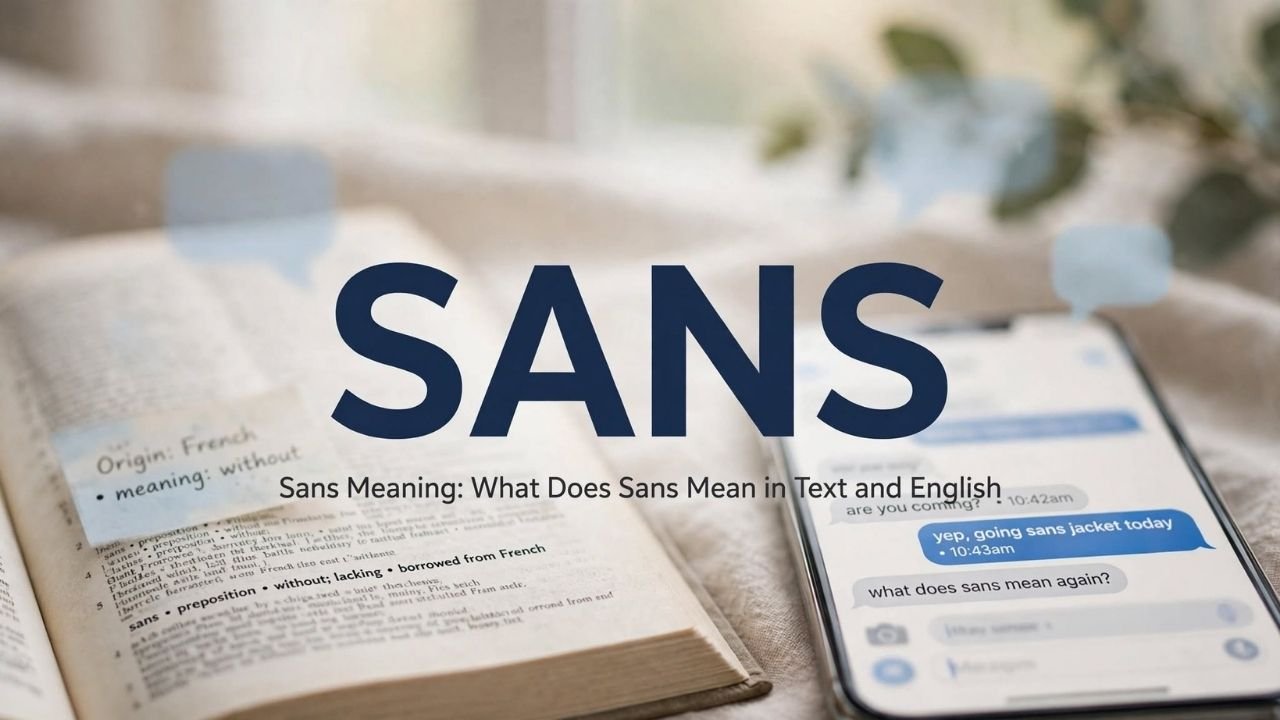
The sans meaning is simple: “without” or “in the absence of something.” The word comes from French and has become part of English vocabulary. You may see sans in writing, menus, captions, literature, branding, and even text messages.
For example, “coffee sans sugar” means coffee without sugar. While sans and “without” often have the same meaning, they can create a different tone. Sans can sound more literary, stylish, playful, or humorous, while “without” feels more natural in everyday English.
So, what does sans mean in English, and how should you use it? This guide explains the sans definition, its origin, pronunciation, meaning in text and texting, common examples, and the difference between sans and without. You’ll also learn whether sans counts as slang and what sans serif means.
Quick Answer
Sans means “without” or “not including” something. It is a French-origin word used in English writing, captions, menus, and creative phrases. In texting, sans usually has the same meaning and is not normally slang.
What Does Sans Mean?
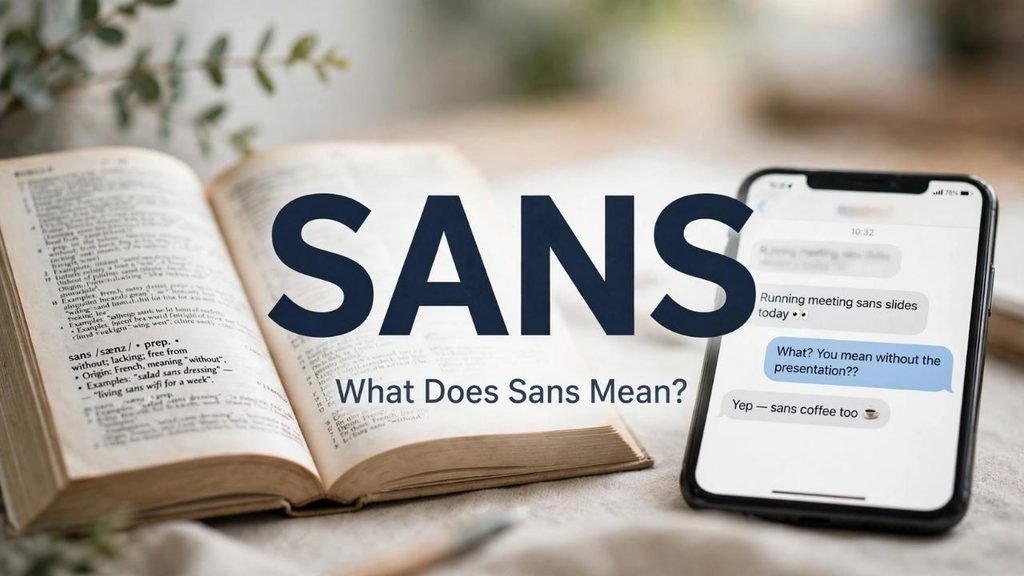
The sans meaning in English is “without” or “in the absence of something.” It tells us that something is missing or not included. For example, “tea sans sugar” means tea without sugar. Likewise, “a room sans furniture” means a room without furniture.
The word sans comes from French, but English speakers also use it in certain situations. It often appears in writing, creative content, menus, captions, and descriptions. In normal conversation, people usually choose “without” because it sounds more natural.
Is Sans a Preposition?
Yes, sans is a preposition. It comes before a noun or noun phrase to show that something is missing. For example, “coffee sans milk” clearly shows that the coffee has no milk.
What Does Sans Mean in Text and Texting?
The sans meaning in text is usually the same as its basic English meaning: without. If someone writes, “Movie night sans snacks,” they mean movie night without snacks. The word does not normally have a special secret meaning in texting.
People may use sans in messages because it makes a sentence sound playful, short, or slightly stylish. However, it is not as common as “without.” Most people simply write “without” in everyday texts.
Examples of Sans in Text Messages
You might see phrases such as “Dinner sans dessert,” “Weekend sans work,” or “Going out sans friends.” Each example means that something is happening without another thing or person.
So, if you see sans in texting, read it as “without” unless the surrounding message gives another clear meaning.
Sans Meaning in Different Contexts
The meaning of sans stays mostly the same in different situations, but its tone can change. In everyday writing, it can replace “without” when the writer wants a short or slightly stylish expression. For example, “A day sans stress” means a day without stress.
Sans in Everyday Writing
People may use sans in articles, descriptions, signs, or creative writing. It can make a phrase sound neat or playful.
Sans in Social Media
On social media, users may write “weekend sans plans” or “coffee sans sugar.” These phrases are short and easy to understand.
Sans in Menus and Food
Menus may use sans to show that an item comes without a certain ingredient.
Sans in Branding and Marketing
Brands sometimes use sans to create a clean, modern, or stylish feel in names and slogans.
Sans vs Without: What’s the Difference?
Sans and without usually mean the same thing. Both show that something is missing, absent, or not included. The main difference is their tone and everyday use.
“Without” is much more common in normal English. For example, “I want coffee without sugar” sounds natural and clear. “I want coffee sans sugar” is correct, but it may sound more stylish, playful, or unusual.
Can Sans Replace Without?
In many sentences, sans can replace without if the sentence structure fits. For example, “A burger sans cheese” means “a burger without cheese.” However, you should not replace every use of “without” with “sans.” Some sentences may sound strange or too formal. For everyday conversation, without is usually the better choice. Use sans when you want a shorter, creative, or slightly different style.
Is Sans Formal, Informal, or Slang?
The word sans is not simply formal or informal. Its tone depends on the situation. It can sound literary, stylish, playful, or humorous, especially when people use it in creative writing or casual captions.
Is Sans a Slang Word?
No, sans is not normally a slang word. It is an established English word borrowed from French. It does not have a special slang meaning in common texting.
Is Sans Formal or Informal?
Sans can appear in both formal and informal writing, but it is less common than “without.” In everyday speech, “without” usually sounds more natural. In writing, sans can add a certain style to a phrase.
For example, “A life sans stress” sounds more creative than “a life without stress.” This makes sans useful when a writer wants a phrase to feel short, polished, or playful.
How Do You Use Sans in a Sentence?
Simple Sans Examples
You can use sans before a noun to show that something is missing or not included. For example, “I ordered a burger sans onions” means I ordered a burger without onions. Another example is, “She went to the party sans her usual jacket.” This means she went to the party without her usual jacket.
Common Sentence Patterns
A simple pattern is “sans + noun.” For example, “coffee sans milk,” “a room sans furniture,” or “a meal sans dessert.” You can also use it in creative phrases, such as “a life sans worry.”
The meaning stays clear when the word after sans names the thing that is missing. If you are writing for a general audience, make sure the sentence is easy to understand. When in doubt, “without” is the safer and more natural choice.
When Should You Use Sans?
You can use sans when you want to say “without” in a short, clear, or slightly creative way. It works well in writing, captions, menus, headlines, and creative descriptions. For example, “Summer sans stress” is a short way to say “summer without stress.”
When Should You Avoid Sans?
Avoid sans when your audience may not know the word or when a very clear sentence matters. In everyday conversation, “without” usually sounds more natural.
You may also want to avoid it in simple instructions, schoolwork, or important business messages if it could make the sentence less clear. The goal should always be easy communication. So, sans is useful, but you do not need to use it everywhere. Choose it when it fits the tone and keeps the meaning clear.
Common Mistakes When Using Sans
Although the sans meaning is simple, some people make small mistakes when using the word. One common mistake is adding “of” after it. You should say “coffee sans sugar,” not “coffee sans of sugar.” The word already means “without.”
Another mistake is treating sans as slang. It is an established word, not a modern texting shortcut. Some people also use it too often because they think it sounds more stylish. This can make writing feel unnatural.
Another common mistake is assuming sans always means “minus.” While the two words can have a similar idea, they are not always interchangeable. “Sans” usually means without or not including, while “minus” often suggests subtraction.
Where Does the Word Sans Come From?
French Origin of Sans
The word sans comes from French and means “without.” English borrowed it many years ago, and it became part of English vocabulary. Its French origin explains why the word can sometimes sound more stylish or literary than the everyday word “without.”
How Sans Became an English Word
English has borrowed many words from French over time, and sans is one of them. It has appeared in English writing for centuries. Today, people still use it when they want to describe something that is missing or not included.
For example, “a meal sans meat” means a meal without meat. The basic meaning has remained quite stable even though its use has changed over time. So, when you use sans today, you are using a French-origin word that has become a recognized part of English.
What Does Sans Mean in Sans Serif?
In sans serif, the word sans still means “without.” The word serif refers to the small decorative strokes found at the ends of some letters. Therefore, sans serif literally means “without serifs.”
A sans-serif typeface has clean letter shapes without those small strokes. You can see these fonts on websites, apps, signs, advertisements, and other digital designs. Designers often use sans serif fonts because they can look clean, simple, and modern. Common examples include Arial, Helvetica, and similar typefaces.
This meaning is different from the everyday use of sans, but the basic idea remains the same. In both cases, sans means without. In typography, it tells us that the letters are without serif strokes.
Sans vs Similar Words
| Word | Meaning | Example |
| Sans | Without or not including | Coffee sans sugar |
| Without | Not having something | Coffee without sugar |
| Lacking | Not having enough of something | A meal lacking flavor |
| Minus | With something removed | Ten minus two |
| Absent | Not present | She was absent today |
| Excluding | Leaving something out | Everyone came, excluding Tom |
The closest word to sans is without. In many sentences, you can use either word and keep the same basic meaning. However, sans often sounds more stylish or creative.
Lacking focuses on something that is missing, while absent usually describes a person or thing that is not present. Minus often relates to subtraction. Excluding shows that something has been left out.
Is Sans Still Used Today?
Yes, sans is still used today, although it is less common than “without.” You may find it in books, articles, menus, captions, advertisements, creative writing, and design terms such as sans serif.
On social media, people sometimes use sans to make short phrases sound clever or playful. For example, “Weekend sans work” means a weekend without work. The word is also useful when a writer wants a phrase to sound slightly different from normal everyday English. However, it is not necessary to use it just to sound sophisticated.
If your readers know the word, sans can be a useful choice. If you want the clearest and most natural wording, without is usually better. So, sans is not outdated, but its use depends on context, audience, and writing style.
FAQ’s
What does sans mean in English?
Sans means “without” or “in the absence of something.” For example, “tea sans sugar” means tea without sugar.
What does sans mean in text?
In text messages, sans usually means “without.” It does not normally have a special slang meaning.
Is sans a slang word?
No. Sans is not normally slang. It is an established English word borrowed from French.
Is sans formal or informal?
Sans can work in different settings, but it is less common in everyday speech. It can sound literary, stylish, or playful depending on the sentence.
Can sans replace without?
Often, yes. Sans can replace “without” when the sentence structure works naturally, but “without” is usually more common.
Is sans still used today?
Yes. You can still find sans in writing, captions, menus, creative phrases, and design terms.
What is the origin of sans?
Sans comes from French and means “without.” English later adopted the word.
What does sans serif mean?
Sans serif means “without serifs.” It describes typefaces that do not have small decorative strokes at the ends of letters.
Conclusion
The sans meaning is simple: “without” or “not including.” It is a French-origin word that has become part of English and is still used today. You may see it in writing, menus, captions, creative phrases, branding, and typography.
In texting, sans usually keeps the same meaning and does not normally act as slang. While sans and without often mean the same thing, they can create different tones. “Without” feels more natural in everyday English, while sans can sound stylish, playful, or literary.
The best choice depends on your audience and context. If you remember that sans means without, you can easily understand and use the word in different situations. It also explains terms such as sans serif, which means a typeface without serifs.
1 thought on “Sans Meaning: What Does Sans Mean in Text and English ”