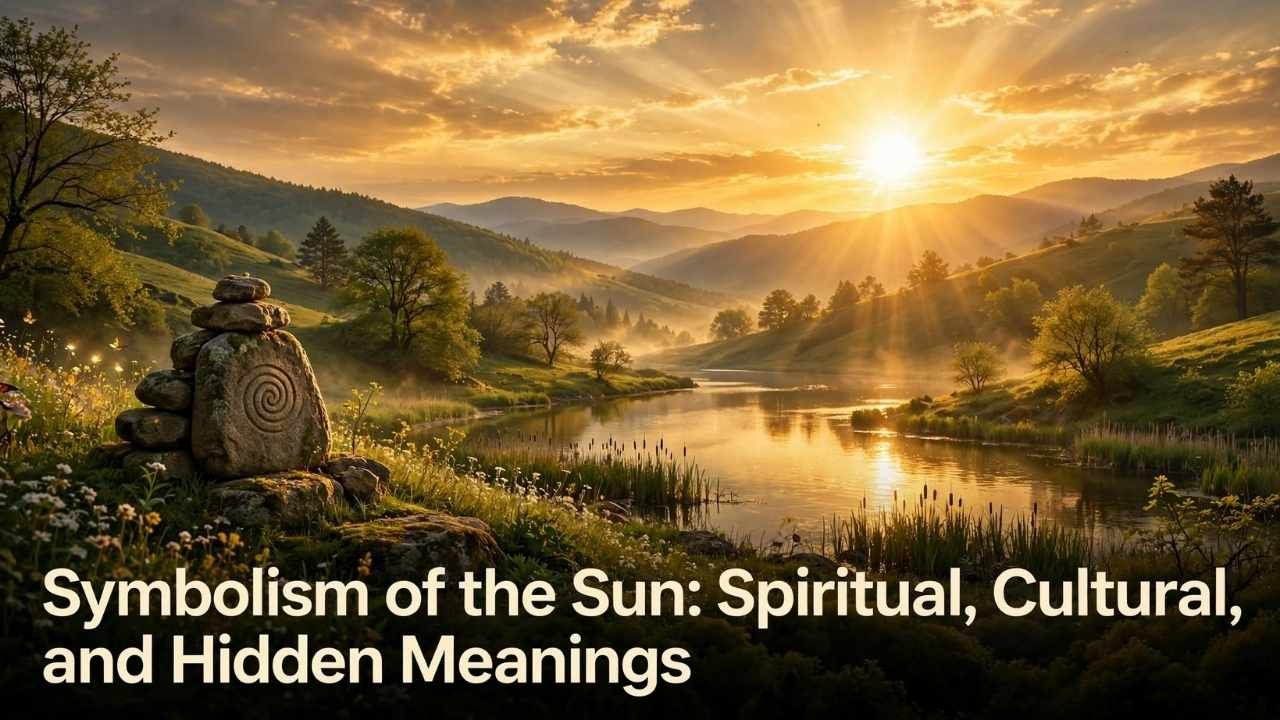
The sun has fascinated people for thousands of years. Each morning, it rises, lights the world, warms the earth, and supports life. Because of this role, people have connected the sun with many deep ideas. The symbolism of the sun often represents life, light, energy, strength, hope, growth, renewal, and spiritual awakening.
However, the meaning of the sun can change across cultures, beliefs, and personal experiences. Ancient people often viewed the sun as a powerful force connected with gods, creation, and nature. Today, people also use sun symbols in art, tattoos, jewelry, stories, and personal growth.
In this guide, we explore what the sun symbolizes from spiritual, cultural, historical, and modern views. We will also explain famous solar symbols, dreams, astrology, and personal meanings.
What Does the Sun Symbolize?

The sun can represent many ideas because people depend on it for light, warmth, and life. At its most basic level, the sun symbolizes life and vitality. Plants need sunlight to grow, and people depend on the sun for natural light and warmth.
The sun also represents clarity and truth because light helps us see what darkness hides. Many traditions therefore connect sunlight with knowledge, wisdom, and understanding. Its daily movement can also represent time, change, and natural cycles.
The sun may symbolize strength, power, leadership, hope, positivity, growth, and renewal. A sunrise can suggest a fresh start, while a sunset can represent closure or change.
So, when people ask, “What does the sun symbolize?”, the answer depends on the culture and context. The symbol can carry both personal and shared meanings.
Light and Illumination
The sun naturally connects with light, so it often symbolizes clarity, truth, knowledge, and understanding. Light allows people to see clearly, while darkness can hide things from view. Because of this simple contrast, many traditions use the sun as an image of illumination.
The spiritual symbolism of the sun often follows this idea. Sunlight can represent finding answers, gaining wisdom, or seeing a situation more clearly. Some people also connect it with spiritual awakening because they view light as a sign of greater awareness.
The sun can also symbolize truth. When light reaches something hidden, people can see it more clearly. This makes the sun a strong symbol for honesty and awareness.
Therefore, the meaning behind the sun symbol may suggest more than physical brightness. It can point toward inner clarity, knowledge, truth, wisdom, and a clearer understanding of life.
Energy and Warmth
The sun gives Earth light and heat, which makes energy and warmth important parts of sun symbolism. People often connect its warmth with comfort, happiness, friendship, and emotional strength. A bright sunny day can also create feelings of joy and hope.
For this reason, the sun symbol meaning often includes positive energy and emotional warmth. A person may use a sun image to show that they want to bring happiness, encouragement, or strength into their life.
The sun also reminds us that energy can support growth. Plants use sunlight as part of the process that allows them to grow, while people use daylight to work, move, and follow daily routines.
As a result, the meaning of the sun can represent both physical and emotional energy. It may stand for warmth, motivation, vitality, happiness, and the power to keep moving forward.
Strength and Power
The sun has always appeared powerful because nothing on Earth can control its daily presence. It crosses the sky, produces intense heat, and affects life on a huge scale. This explains why many cultures connected the sun with strength, authority, and power.
The sun symbol can therefore represent personal strength and confidence. People may choose solar imagery when they want to express courage, independence, or the ability to lead. Ancient rulers and religious traditions also used sun imagery to show royal or divine power.
However, sun symbolism does not always suggest gentle strength. The sun can also become harsh through extreme heat and drought. This reminds us that great power can help or harm depending on how people use it.
In this way, the symbolic meaning of the sun includes both strength and responsibility. It can represent leadership, authority, confidence, courage, and powerful energy.
Hope and Positivity
The sun often brings a feeling of hope because it returns after every night. Even after hours of darkness, morning eventually arrives. This simple natural cycle gives the sun symbolism a strong connection with optimism and positive change.
A sunrise can represent the beginning of a better period, especially after a difficult experience. People often use phrases about seeing light after darkness to describe hope, healing, or a fresh start. This makes the sun a common symbol of positivity, encouragement, and faith in the future.
The sun can also represent emotional warmth. A sun image may remind someone to focus on happiness, gratitude, and the good parts of life.
Therefore, what the sun represents can include more than physical light. It can symbolize the belief that difficult moments can pass and new opportunities can appear. The sun can remind us to stay hopeful, positive, and open to change.
Growth and Creation
The sun plays an important role in the growth of plants and many natural processes. Because people have watched nature grow under sunlight, the sun has become a symbol of growth, creation, and fertility in many traditions.
Sun symbolism can represent the start of something new, such as a personal goal, relationship, project, or stage of life. Its energy can serve as a simple image of progress and development.
The sun also connects with creation because it supports life on Earth. This idea has influenced many stories and religious traditions in which solar forces connect with creation, nature, or divine activity.
On a personal level, a sun symbol can represent self-development and personal growth. It may remind someone to keep learning, improving, and moving toward a better version of themselves.
Thus, the meaning of the sun can express creation, fertility, progress, growth, abundance, and the energy needed to begin something new.
Truth and Clarity
The sun can symbolize truth and clarity because its light makes things easier to see. This simple idea appears in many forms of speech, art, religion, and storytelling. When people describe a truth as coming into the light, they connect knowledge with brightness.
The sun symbolism meaning can therefore suggest honesty, awareness, understanding, and clear thinking. A bright sun may represent a moment when confusion disappears and a person finally understands something important.
This idea also connects with personal growth. People often gain clarity after facing difficult questions or learning from past experiences. In this sense, the sun can represent the moment when a person sees life from a clearer point of view.
The sun as a spiritual symbol may also suggest inner truth. Some people connect its brightness with finding their purpose or becoming more aware of themselves.
Overall, the sun can represent truth, clarity, awareness, understanding, honesty, and wisdom.
Spiritual Meaning of the Sun
The spiritual meaning of the sun often centers on light, life, awareness, and inner strength. Many people see the sun as a source of divine light that helps them move from confusion toward understanding. Its daily return can also represent hope, faith, and a fresh spiritual start.
The sun as a spiritual symbol may represent spiritual awakening, enlightenment, inner wisdom, and higher awareness. Some people view its brightness as a reminder to discover their true purpose and trust their inner strength.
The sun can also represent guidance. Just as sunlight helps people see their path, spiritual sun symbolism can suggest finding direction during uncertain times. Its warmth may represent comfort and emotional healing.
For many people, the spiritual significance of the sun comes from its ability to connect physical life with ideas of renewal, consciousness, hope, and transformation.
Divine Light
Light has a strong place in many spiritual and religious traditions, which gives the sun a natural connection with divine light. People often use brightness as a symbol of goodness, truth, wisdom, and a higher power.
The sun spiritual meaning can therefore suggest a force that helps people move away from fear, doubt, or confusion. Its light may represent spiritual guidance and a clearer understanding of life.
Some traditions connect the sun with sacred beings or divine forces, while others treat sunlight as part of the natural world rather than as a god. These views can differ greatly, so we should not assume that every culture gives the sun the same religious meaning.
Still, the image remains powerful. A bright sun can represent divine presence, spiritual guidance, truth, hope, and awareness. For a person on a spiritual journey, it may serve as a simple reminder to seek light, wisdom, and inner peace.
Spiritual Awakening
The sun often represents spiritual awakening because it moves from darkness into light each day. This natural change gives people an easy image for personal and spiritual growth. Darkness can represent confusion, while sunlight can suggest awareness and understanding.
When people use sun symbolism and awakening together, they often describe a time when they begin to understand themselves more deeply. The sun may represent discovering a new purpose, letting go of old fears, or becoming more aware of personal choices.
The sun symbolism spiritual awakening connection does not have one fixed meaning. Different people may experience it in different ways. For one person, the sun may represent faith. For another, it may represent self-discovery or emotional healing.
In this sense, the sun can symbolize the movement toward higher consciousness, inner wisdom, clarity, personal growth, and spiritual transformation.
Inner Strength and Personal Power
The sun can represent inner strength, confidence, and personal power because it gives off constant energy. Its steady presence can remind people to stay strong during difficult periods.
The sun symbolism and self-confidence connection often appears in personal growth and spiritual practices. A sun image may encourage someone to trust their abilities, speak with confidence, and take control of their choices.
The sun can also represent a strong sense of identity. Its brightness makes it stand out, so people may use it as a symbol of self-expression and individuality.
However, personal power does not mean controlling others. Healthy strength includes confidence, responsibility, and respect. The sun provides a useful image for this balance because it supports life while also showing how powerful natural forces can become.
Therefore, the spiritual meaning of the sun may include courage, confidence, resilience, self-belief, personal power, and emotional strength.
Hope, Guidance, and Faith
The sun returns after every night, making it a natural symbol of hope and guidance. Even when darkness lasts for hours, people know that daylight will return. This simple cycle can create a strong feeling of trust in the future.
The sun as a spiritual symbol may remind people that difficult periods do not always last. A sunrise can represent a new chance, while sunlight can suggest direction when someone feels lost.
For some people, this meaning connects with faith. They may see the sun as a reminder to trust a higher power, nature, or the process of life. Others may simply view it as a positive image of resilience.
The meaning depends on personal belief, but the message remains easy to understand: light can follow darkness. Because of this, sun symbolism often represents hope, faith, guidance, encouragement, and a fresh beginning.
Why Has the Sun Become Such a Powerful Symbol?
The sun became a powerful symbol because humans have always depended on it. It gives us light and warmth, supports plant growth, helps shape natural cycles, and marks the passing of days and seasons.
People also notice the sun every day. Its regular movement across the sky creates a strong sense of order. Sunrise brings daylight, while sunset brings darkness and rest. These repeating patterns helped people connect the sun with time, life, death, renewal, and change.
Its great power also made the sun easy to connect with gods, kings, leaders, and other powerful forces. Yet the sun could also become dangerous through extreme heat and drought.
For these reasons, solar symbolism developed in many forms around the world. The sun could represent life and death, creation and destruction, power and protection, light and darkness.
Sun Symbolism Across Ancient Cultures
Ancient societies gave the sun many important meanings. In ancient Egypt, people connected the sun with gods such as Ra and with royal and divine power. Egyptian traditions also used the solar disk in different religious settings.
In Mesopotamia, people associated the sun with Shamash, a deity linked with justice and judgment. Greek traditions connected the sun with Helios, while Roman culture honored solar figures such as Sol.
In Hindu traditions, Surya represents the sun and receives religious honor. Japanese mythology connects the sun with Amaterasu, an important figure in Shinto tradition. The Inca honored Inti, while Aztec traditions gave major importance to solar gods and cycles.
These examples show that sun symbolism across cultures shares some themes, such as light and power, but each culture developed its own beliefs and stories.
Famous Sun Symbols Throughout History
People have created many visual forms to represent the sun. Common examples include the solar disk, rayed sun, sunburst, sun wheel, sun cross, winged sun, and sun with a face.
A simple circle may represent the sun without adding a specific cultural meaning. Rays can emphasize light and energy, while a face can give the sun human qualities. A winged sun can carry religious or royal meanings in certain historical settings.
The sun wheel meaning can also vary across cultures and periods. Some solar designs connect with cycles, movement, time, or seasonal change.
This variety explains why we should not treat every ancient sun symbol as identical. The shape matters, but so do the culture, date, location, object, and purpose.
Understanding sun symbols and meanings requires context. A similar-looking design can carry very different ideas in different places.
Winged Sun Symbol
The winged sun symbol combines solar imagery with wings, creating a powerful visual design. Historical examples appear in parts of Egypt, the ancient Near East, Persia, and Anatolia, although the details and meanings vary.
The wings can suggest movement, protection, elevation, or divine power, while the sun can represent light, life, or authority. Together, these elements can create an image of power, divinity, protection, and eternal life in certain contexts.
However, people should not assume that every winged sun carries the same message. Different cultures used related designs for different purposes.
The winged sun meaning depends on its historical setting and surrounding imagery. A religious object may carry a different message from a modern decorative design.
This symbol remains popular today because its strong shape combines the familiar power of the sun with the freedom and movement suggested by wings.
Sunburst and Rayed Sun
A sunburst usually shows a central circle surrounded by rays. The design strongly suggests light spreading outward, which makes it a common symbol of energy, brightness, power, and expansion.
The rayed sun symbol appears in many artistic and decorative settings. Some historical examples connect it with religious or royal ideas, while modern designs may simply use it to create a feeling of warmth and optimism.
The number, shape, and style of the rays can change the appearance of the symbol. Straight rays can create a sharp and strong look, while curved rays may feel softer.
A sunburst can therefore carry both historical and personal meanings. In modern art, jewelry, or tattoos, people may use it to represent confidence, hope, energy, growth, or a new beginning.
The sunburst symbolism becomes strongest when the design works together with its cultural or personal context.
Sun With a Face
The sun with a face gives the sun human features, making it look more like a living character. Artists have used this design in different periods, especially in decorative art, illustrations, folk traditions, and modern designs.
Adding a face can make the sun feel friendly, watchful, powerful, or emotional. In some contexts, it may represent a personified sun or a mythological being. In others, it simply adds personality to a decorative image.
The sun face symbolism therefore depends heavily on the artwork and culture. A historical religious image should not receive the same interpretation as a modern cartoon sun.
Today, people often use a smiling sun to represent happiness, warmth, optimism, and positive energy. The design feels welcoming because it combines the familiar shape of the sun with a human expression.
This shows how artistic choices can change the emotional meaning of solar imagery.
How Context Changes the Meaning of a Sun Symbol
A sun symbol does not have one universal meaning. Its meaning can change based on culture, time period, religion, location, material, artistic style, and purpose.
For example, a sun on a religious object may represent divine power, while the same basic shape on a modern tattoo may represent personal growth. A solar image on a royal object may suggest authority, while one in a nature-themed design may focus on life and energy.
When you study how to interpret a sun symbol, first ask where it came from. Look at the surrounding images, inscriptions, colors, materials, and intended use. These details can reveal more than the shape alone.
This approach helps avoid common mistakes in sun symbolism. Instead of asking only, “What does this symbol mean?” ask, “What did this symbol mean in this specific context?”
That question often leads to a more accurate answer.
Psychological Meaning of the Sun
The psychological meaning of the sun often connects with confidence, optimism, energy, identity, and emotional warmth. Because sunlight can create a bright and open environment, people may naturally associate it with positive feelings.
A person may choose sun imagery to express self-confidence, personal growth, hope, or a strong sense of identity. The symbol can also remind someone to stay active and look toward positive possibilities.
The sun can represent consciousness as well. Its light provides a simple image for awareness and understanding. In this sense, sun as a symbol of consciousness can describe the process of becoming more aware of thoughts, emotions, and personal choices.
These meanings do not work as fixed psychological rules. Personal experiences shape how people respond to symbols.
Still, the sun often carries a warm emotional message: confidence, joy, clarity, resilience, awareness, and growth.
Positive and Negative Symbolism of the Sun
Most people associate the sun with positive ideas such as life, hope, warmth, strength, growth, and happiness. Yet the sun can also carry darker meanings. Its heat can burn, dry land, and make life difficult when it becomes extreme.
This creates a useful balance in sun symbolism. The same force that supports life can also cause harm. The sun can represent confidence, but excessive confidence may become pride. It can represent power, but uncontrolled power can become destructive.
Some stories and artworks use a harsh sun to express danger, exhaustion, drought, or suffering. A darkened sun or eclipse may also create feelings of uncertainty or change.
Therefore, the negative symbolism of the sun can include pride, excessive power, harshness, danger, destruction, and loss.
Looking at both sides gives a fuller understanding of the symbol. The sun does not always represent simple positivity; its meaning can reflect the balance between benefit and danger.
Sunrise and Sunset Symbolism
Sunrise symbolism often represents new beginnings, hope, renewal, and fresh energy. When the sun rises, darkness gives way to light, making dawn a natural image of starting again.
The rising sun meaning can therefore suggest a new chapter, personal growth, healing, or a positive change. Many people use sunrise imagery when they want to express optimism about the future.
In contrast, sunset symbolism often focuses on endings, reflection, peace, and transition. A setting sun can represent the closing of one stage before another begins.
The setting sun meaning does not always suggest sadness. It can also represent rest, acceptance, wisdom, or the beauty of change.
Together, sunrise and sunset show the sun’s connection with cycles and transformation. One marks a beginning, while the other marks an ending. Both remind us that life moves through changing stages rather than remaining fixed.
Solar Eclipse Symbolism
A solar eclipse occurs when the moon passes between Earth and the sun and blocks some or all of the sun’s visible light. Because an eclipse temporarily changes the normal appearance of the sun, people have often given it powerful symbolic meanings.
Historically, some societies viewed eclipses as warnings, signs, or unusual events. Modern people may interpret them more personally, using the eclipse as a symbol of change, uncertainty, transformation, hidden truths, or temporary darkness.
The spiritual meaning of a solar eclipse can suggest a period when something becomes less clear before a new understanding develops. It may also represent the meeting of opposing forces, similar to sun and moon symbolism.
There is no single universal eclipse symbolism. Its meaning depends on culture, belief, and personal experience.
As a symbol, an eclipse can remind us that even when light becomes hidden, the sun itself has not disappeared.
Sun Symbolism in Dreams
The sun symbolism in dreams can carry many personal meanings. A bright sun may suggest happiness, hope, confidence, or clarity, while a rising sun may represent a fresh beginning.
A sunset might reflect closure, change, or the end of a stage. An eclipse may symbolize uncertainty, hidden emotions, or a temporary loss of direction. However, dream meanings do not follow fixed scientific rules.
The sun symbol in dreams often depends on the dreamer’s feelings and life situation. A person who feels hopeful may experience a bright sun differently from someone facing stress or uncertainty.
When exploring what does the sun symbolize in dreams, consider the whole dream rather than one image. Ask how the sun looked, what happened around it, and how you felt during the dream.
Dream symbolism works best as a tool for personal reflection, not as a guaranteed prediction of future events.
Sun Symbolism in Art and Literature
Artists and writers have used the sun to express life, beauty, hope, power, love, change, and emotional intensity. Its brightness makes it an easy image for both physical and emotional ideas.
In paintings, artists may use sunlight to draw attention to a person or scene. Vincent van Gogh, for example, used strong sunlight and yellow tones in works that create feelings of energy and movement.
Writers also use the sun as a metaphor. It can represent happiness, truth, freedom, youth, or the passing of time. In literature and poetry, a sunrise may mark a new beginning, while a setting sun may suggest loss or reflection.
The sun symbolism in art and literature changes with the artist’s purpose. A cheerful sun may create warmth, while a harsh sun may create tension.
This flexibility makes the sun a lasting symbol in paintings, poetry, storytelling, architecture, and visual art.
What Does the Sun Symbolize in Personal Life?
In personal life, the symbolic meaning of the sun can become deeply individual. One person may see it as a reminder of hope, while another may connect it with confidence, healing, family, or a major life change.
A sun symbol can represent personal growth after a difficult period. It can also remind someone to stay positive, trust themselves, or appreciate the simple things that bring warmth to life.
Some people choose solar imagery after reaching an important goal. Others use it to mark a new beginning or remember someone who brought happiness into their life.
There is no single correct personal interpretation. Your experience, beliefs, memories, and goals all shape the meaning.
When asking what does the sun represent spiritually or personally, start with your own response to the symbol. Think about what the sun makes you feel and which part of your life you want it to represent.
FAQ’S
What does the sun symbolize spiritually?
The spiritual meaning of the sun often includes divine light, life, hope, clarity, renewal, spiritual awakening, and inner strength. Different traditions interpret solar imagery in different ways, so there is no single spiritual meaning for everyone.
What does the sun symbolize in different cultures?
The sun can represent life, power, justice, creation, time, fertility, divine presence, or renewal. Ancient Egypt, Mesopotamia, Greece, Rome, India, Japan, and Mesoamerican cultures developed different solar traditions.
What does the rising sun symbolize?
The rising sun commonly represents new beginnings, hope, rebirth, growth, and fresh energy. People often use it as an image of starting a new chapter.
What does the setting sun symbolize?
A setting sun can represent endings, reflection, rest, transition, and acceptance. It can also remind people that one cycle is ending before another begins.
What does the sun symbolize in dreams?
The sun in dreams can represent clarity, hope, happiness, confidence, or change. However, dream meanings depend on personal feelings and circumstances rather than following a fixed rule.
What does a sun tattoo symbolize?
A sun tattoo can represent strength, hope, renewal, growth, confidence, energy, and transformation. The exact meaning depends on the design and the wearer’s personal story.
What does the sun symbolize in astrology?
In astrology, the sun traditionally represents identity, self-expression, confidence, creativity, leadership, and purpose. These meanings belong to astrological interpretation rather than established science.
Does the sun have negative symbolism?
Yes. The sun can also represent excessive power, pride, harshness, danger, drought, or destruction. Its positive and negative meanings depend on the context.
Conclusion
The symbolism of the sun reaches across history, culture, religion, art, psychology, and personal life. Its most common meanings include life, light, energy, strength, hope, growth, renewal, clarity, wisdom, and power.
Yet the sun does not carry one fixed meaning. Sun symbolism changes with culture, time, design, and personal experience. A solar disk in ancient Egypt may carry a religious meaning, while a sun tattoo today may represent personal growth or a fresh start.
The sun also offers a simple lesson through its daily cycle. Darkness gives way to light, endings lead to new beginnings, and nature continues to change. That is why the sun remains such a powerful symbol.
Whether you see it as a spiritual guide, a sign of hope, a historical symbol, or a personal reminder, the sun continues to represent one simple idea: light can help us move forward.