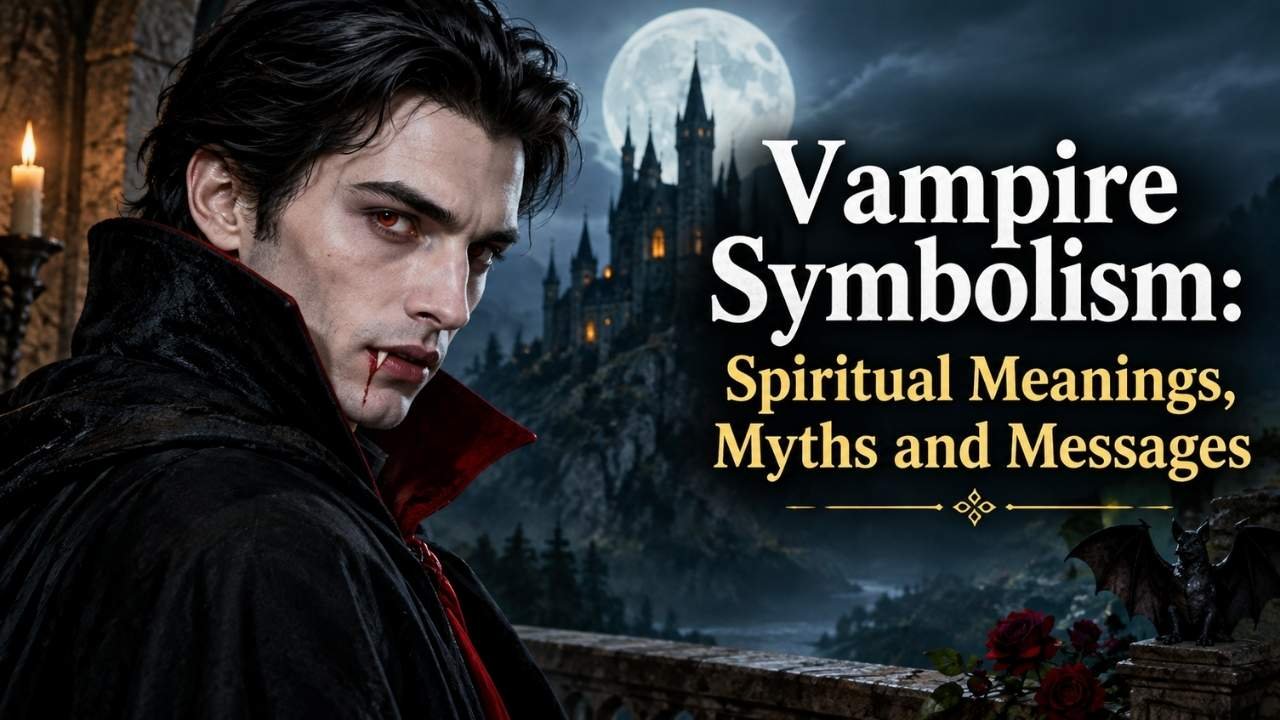
Vampires have fascinated people for centuries because they represent much more than frightening creatures of the night. Vampire symbolism connects with some of life’s deepest themes, including death, immortality, desire, temptation, power, transformation, and fear.
In stories and folklore, vampires often stand between two worlds, making them powerful symbols of both life and death.So, what does a vampire symbolize? A vampire can represent death and mortality, but it can also symbolize eternal life, forbidden desire, emotional drain, control, mystery, and the darker side of human nature.
In a spiritual or psychological sense, vampire symbolism may point to something that consumes your energy, controls your choices, or brings hidden emotions to the surface. The meaning can change depending on the context. A vampire in a dream may carry a different message from a vampire in mythology, literature, a relationship, or a tattoo. By looking at these different meanings, we can better understand why the vampire remains such a powerful symbol today.
Quick Answer
Vampire symbolism represents death, immortality, desire, temptation, power, emotional drain, transformation, and mystery. It can also reflect hidden fears, unhealthy attachments, or the darker side of human nature.
What Does a Vampire Symbolize?
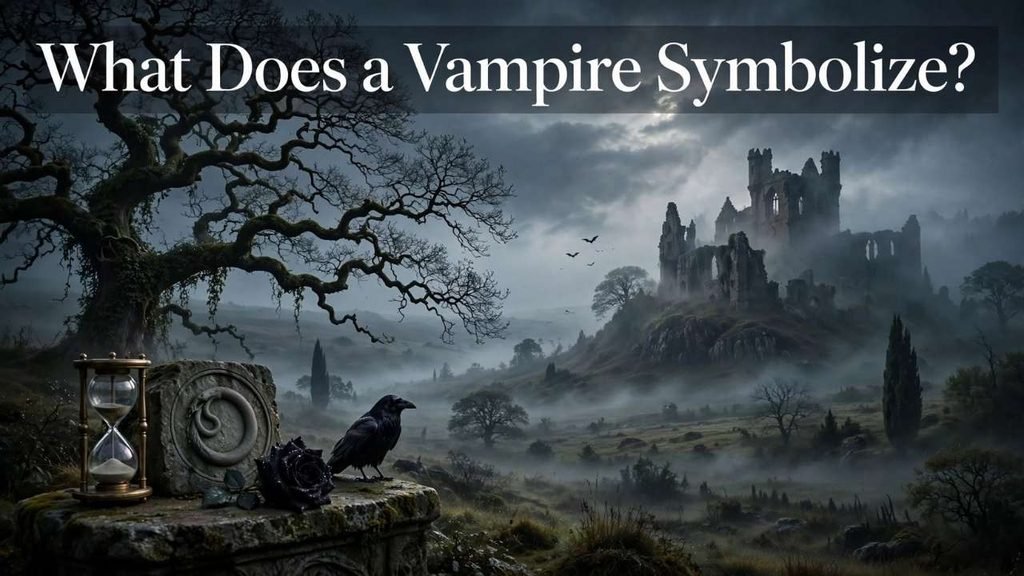
A vampire symbolizes many ideas, so its meaning does not always stay the same. At its core, vampire symbolism often represents death, immortality, desire, temptation, power, and transformation. The vampire lives between life and death, which makes it a strong symbol of human fears and wishes.
It can also represent something that slowly takes away a person’s energy, freedom, or emotional strength. In spiritual interpretations, a vampire may symbolize negative energy, unhealthy attachments, or emotional drain. In psychology, it can represent the shadow self, hidden desires, fear, or parts of your personality that you avoid.
A vampire can also represent mystery, danger, forbidden attraction, and isolation. This wide range of meanings explains why the vampire meaning changes across dreams, relationships, folklore, literature, and modern culture.
The Main Meanings of Vampire Symbolism
The main meanings of vampire symbolism come from the creature’s unusual connection with blood, darkness, death, and endless life. These ideas have made vampires powerful symbols in folklore and modern stories.
Death and Mortality
Vampires often symbolize death and mortality because they exist between the living and the dead. They remind us that life is temporary and can create fear around aging, loss, and the unknown. Their connection with graves, corpses, and darkness also makes them symbols of the human struggle to understand death and what may come after it.
Immortality and Eternal Life
Immortality gives vampire stories another powerful meaning. A vampire may represent the desire to escape death, aging, and the limits of human life. However, eternal life does not always appear as a gift. Many stories show immortality as lonely or painful. Therefore, vampire immortality symbolism can represent both the wish for eternal youth and the hidden cost of living forever.
Desire and Temptation
Vampires often symbolize desire, temptation, and forbidden attraction. Their mysterious nature can make them appealing while their actions create danger. This contrast explains why vampire stories often connect love with fear. A vampire may represent a desire that feels powerful but becomes difficult to control. In this way, vampire symbolism and temptation can reflect the struggle between what we want and what we know may hurt us.
Power and Control
A vampire can also represent power, control, and manipulation. Supernatural strength gives the creature an advantage over ordinary people, while the act of drinking blood creates a clear power imbalance. Symbolically, this can reflect relationships where one person controls or takes from another. Vampire power symbolism can therefore represent dominance, influence, manipulation, and the fear of losing control.
Emotional and Energy Drain
Modern interpretations often use the vampire as a symbol of emotional or energy drain. An energy vampire, for example, describes someone who leaves others feeling tired, stressed, or emotionally empty. In this symbolic sense, the vampire represents people or situations that constantly take without giving enough in return. It can remind us to notice unhealthy relationships and protect our emotional boundaries.
Transformation and Identity
The vampire bite often changes a person’s entire existence, so vampires naturally symbolize transformation and identity. Becoming a vampire can represent leaving an old life behind and entering something unfamiliar. This symbolism can connect with major life changes, personal growth, or fear of becoming someone different. Vampire transformation symbolism therefore has both positive and negative sides.
Isolation and Loneliness
Vampires often live outside normal society, which makes them symbols of isolation, loneliness, and feeling different. Their long lives can separate them from ordinary human relationships. This idea appears strongly in modern vampire stories, where characters may struggle to belong. A vampire can therefore represent someone who feels like an outsider or cannot easily connect with the world around them.
Mystery and Darkness
Darkness and mystery remain some of the strongest vampire symbols. Night hides what people cannot see, so it naturally represents secrets, fear, the unknown, and hidden desires. Vampires move through this darkness, making them symbols of things that remain outside ordinary understanding. This meaning also explains why vampire stories often use nighttime, shadows, black clothing, and mysterious settings.
Vampire Spiritual Meaning
The vampire spiritual meaning often focuses on energy, temptation, attachment, and inner awareness. Some spiritual interpretations describe vampires as symbols of people or situations that drain your emotional energy. They may also represent unhealthy connections that make you feel weak or controlled.
Energy and Spiritual Boundaries
A vampire can serve as a metaphor for protecting your energy and setting healthy boundaries. If a relationship constantly leaves you exhausted, the vampire image may represent that experience. In spiritual symbolism, this does not prove that supernatural energy loss occurs. Instead, it offers a simple way to think about emotional stress, unhealthy attachments, and the importance of protecting your inner peace.
Shadow and Inner Struggles
Vampire symbolism can also connect with the shadow self. This idea refers to feelings, fears, or desires that you hide or avoid. Seeing a vampire as a spiritual symbol may encourage you to face these hidden parts instead of ignoring them. The message can involve self-awareness, personal growth, and balance between your darker emotions and your healthier choices.
Psychological Meaning of Vampire Symbolism
From a psychological view, the vampire represents hidden fears, desires, control, and the shadow self. The creature often reflects parts of human nature that people find difficult to accept.
The Shadow Self
The vampire can represent the shadow self, including anger, jealousy, desire, fear, or other emotions that a person keeps hidden. Instead of seeing these feelings as purely negative, vampire symbolism can encourage self-reflection. Understanding these hidden emotions may help a person make healthier choices and gain greater control over their actions.
Fear of Losing Control
Vampires also represent the fear of losing control. A bite can change a person’s identity, while a vampire can control or manipulate another person. This makes the creature a useful symbol for situations where someone feels powerless, influenced, or trapped. In this sense, vampire psychology connects with control, vulnerability, obsession, and personal boundaries.
What Blood Symbolizes in Vampire Stories
Blood symbolism plays a central role in vampire stories because blood represents life, energy, strength, and connection. When a vampire drinks blood, the act can symbolize taking another person’s life force or power.
This makes blood a strong symbol of both life and death. It can also represent passion, desire, sacrifice, intimacy, and control. In some stories, sharing blood creates a deep bond between characters, which connects blood with trust and emotional connection.
However, the vampire usually takes blood rather than gives it, creating a clear image of exploitation and unequal exchange. This contrast makes vampire blood symbolism especially powerful. It shows how something connected with life can also become a source of danger, fear, and loss.
Blood as Life Force
Blood commonly symbolizes vitality and life force because the body needs it to survive. In vampire stories, drinking blood allows the creature to continue living. Symbolically, this can represent someone taking another person’s strength, time, attention, or emotional energy. Blood can therefore connect physical survival with emotional and spiritual dependence.
Blood, Desire, and Intimacy
Vampire stories often connect blood with desire and intimacy because drinking blood requires close physical contact. The act can represent attraction, passion, trust, or dangerous desire. At the same time, it may show how intimacy can become unhealthy when one person takes too much from another. This creates a strong link between blood, love, power, and vulnerability.
What Do Vampire Bites Symbolize?
A vampire bite can symbolize much more than physical danger. It often represents loss of control, intimacy, transformation, power, and emotional influence. When a vampire bites someone, the victim may lose blood, strength, or even their human identity.
This makes the bite a clear symbol of one person crossing another person’s boundaries. In many stories, the bite also creates a connection between the vampire and victim. That connection may feel frightening, attractive, or impossible to escape.
From a psychological view, a vampire bite can represent an experience that changes how someone sees themselves. It may also symbolize obsession, emotional dependency, toxic attraction, or surrendering personal power. The meaning depends on the story and the emotions connected with the bite.
Loss of Control
The bite can represent losing control over your choices or identity. The victim often cannot stop the transformation after the bite. Symbolically, this may reflect situations where another person strongly influences your decisions. It can also represent fear of becoming dependent on someone or losing your sense of independence.
Transformation Through the Bite
A vampire bite often marks the beginning of transformation. The victim leaves one identity behind and enters a new life. This can symbolize major personal change, emotional growth, or a difficult transition. It may also represent the fear that one powerful experience can permanently change who you are.
Vampire Symbols and Their Meanings
Vampire stories contain many symbols that add deeper meaning to the creature. Fangs, bats, coffins, graves, mirrors, night, moonlight, sunlight, black clothing, and red blood all contribute to vampire symbolism.
Each symbol can express a different part of the vampire’s nature. Fangs suggest danger and predatory behavior, while bats connect with darkness, movement, and transformation. Coffins and graves remind us of death and immortality, while mirrors can represent identity and the question of whether the vampire still belongs to the human world.
Night creates mystery and fear, while sunlight can represent truth and exposure. Colors also carry meaning. Black can suggest secrecy and darkness, while red can represent blood, passion, danger, and life.
Fangs and Bats
Vampire fangs symbolize danger, hunger, and predatory instinct. They show how the vampire survives by taking from others. The bat often represents night, mystery, movement, and transformation. Together, these symbols strengthen the image of a creature that hides from ordinary society while living by its own rules.
Coffins, Graves, and Mirrors
A coffin represents death, sleep, and the undead, while a grave connects vampires with mortality and returning from death. A mirror can symbolize identity and separation from ordinary humanity. In many vampire stories, the missing reflection creates a powerful image of a creature that no longer belongs fully to the human world.
Night, Moon, and Sunlight
Night represents mystery, hidden desires, and the unknown. The moon can suggest transformation, instinct, and the natural forces that humans cannot control. In contrast, sunlight often represents truth, goodness, exposure, and reality. The conflict between darkness and sunlight creates one of the strongest symbolic opposites in vampire stories.
Black and Red
Black often symbolizes darkness, secrecy, mystery, grief, and the unknown. It fits the vampire’s connection with nighttime and hidden worlds. Red represents blood, passion, danger, desire, and life itself. Together, black and red create a visual contrast between darkness and vitality, making them powerful colors in vampire symbolism, fashion, art, and tattoos.
Vampire Symbolism in Dreams
Vampire symbolism in dreams can reflect fear, desire, emotional pressure, change, or a feeling that someone is taking too much from you. The meaning depends strongly on the dreamer’s emotions and personal situation. Dreaming about a vampire may represent an energy drain, unhealthy relationship, hidden fear, or strong attraction.
Being chased by a vampire can suggest that you avoid something that makes you uncomfortable. A vampire bite may point to loss of control, while fighting a vampire can represent your attempt to protect yourself.
Becoming a vampire may symbolize a major identity change. A friendly vampire can have a different meaning and may represent accepting a hidden part of yourself. Dream symbols do not have one fixed meaning, so personal context always matters.
Vampire Symbolism in Love and Relationships
In love and relationships, vampire symbolism often represents intense attraction, forbidden desire, passion, obsession, and emotional dependency. Vampire stories frequently present love as something powerful enough to overcome normal limits.
This can make the vampire a symbol of romantic intensity and deep attraction. However, the same stories can warn about unhealthy relationships. A partner who constantly controls, manipulates, or drains another person may resemble an emotional vampire.
The symbolism can therefore highlight the difference between healthy love and toxic attachment. A vampire may also represent the fear of being consumed by a relationship and losing your identity. In this way, vampire symbolism encourages people to think about boundaries, trust, independence, power, and emotional balance within close relationships.
Vampire Mythology and Folklore
Vampire mythology developed through many stories about death, disease, unusual burials, and beings that returned from the grave. Different cultures created their own ideas about creatures that harmed or fed on the living.
Eastern European folklore strongly influenced the modern vampire, especially stories from areas such as Serbia and the Balkans. However, vampire-like beings also appear in other traditions around the world. These older stories often reflected fears about death, disease, burial, and the unknown.
Over time, writers and storytellers changed these creatures into the vampires we recognize today. Modern vampires often appear attractive, intelligent, powerful, and romantic, while older folklore could portray them as frightening or unnatural. Understanding this history helps explain why vampire symbolism carries so many different meanings.
Eastern European Folklore
Eastern European vampire folklore strongly shaped the modern vampire image. Stories from Serbia, Romania, and nearby regions described dead people who supposedly returned to trouble the living. These legends often connected vampires with burial practices, disease, and fear of the dead. Later writers used these ideas to create more complex vampire characters.
Vampire-Like Beings Around the World
Vampire-like creatures appear in many cultures, although they do not all share the same traits. Some legends describe beings that consume blood, while others describe creatures that drain life or harm people during sleep. These traditions show a common human fear of life being taken away by an unknown force.
How Dracula Changed Vampire Symbolism
Dracula played a major role in shaping modern vampire symbolism. Bram Stoker’s 1897 novel presented Count Dracula as a powerful, mysterious, and intelligent figure rather than simply a frightening corpse.
The character combined seduction, danger, power, immortality, sexuality, and fear. Dracula also connected the vampire with aristocratic status and social control. His elegant appearance made the vampire more attractive and complex, helping create the image of the charming but dangerous immortal.
The story also used religious symbols, sunlight, blood, darkness, and foreignness to build deeper themes. As later writers and filmmakers developed vampire characters, they expanded these ideas even further. Dracula helped transform the vampire from a creature of folklore into one of the most recognizable symbols in Gothic literature and popular culture.
Dracula and Power
Dracula can symbolize power, control, and social hierarchy. His wealth, age, supernatural strength, and ability to influence others make him more powerful than ordinary people. His character can therefore represent fears about people who use status or authority to control those around them.
Dracula and Seduction
Dracula also helped connect vampires with seduction and forbidden desire. His mysterious personality attracts people even while he threatens them. This mixture of attraction and danger became a major part of modern vampire stories. It shows how desire can sometimes exist alongside fear, making the vampire both appealing and frightening.
Vampire Symbolism in Literature and Popular Culture
Vampires have become major figures in Gothic literature, horror, fantasy, movies, television, and paranormal romance. Writers use them to explore themes that go beyond simple horror. A vampire can represent the outsider, the antihero, the forbidden lover, or someone searching for identity.
Modern stories often make vampires more human by giving them emotions, personal struggles, and moral choices. This change has created many different forms of vampire symbolism in literature and popular culture. Some characters represent danger and evil, while others symbolize loneliness, freedom, rebellion, or self-discovery.
Vampire stories also appear in fashion, Halloween, tattoos, art, and goth culture. Their lasting popularity comes from their ability to combine fear, beauty, desire, mystery, and transformation in one powerful image.
Positive Meanings of Vampire Symbolism
Although vampires often represent dark ideas, vampire symbolism can also carry positive meanings. Their ability to survive, transform, and exist outside normal society can represent resilience, independence, personal power, and self-discovery.
A vampire may symbolize someone who refuses to follow traditional rules and chooses their own path. Transformation also gives vampire stories a connection with personal growth and reinvention. The vampire’s shadowy nature can encourage people to explore hidden parts of themselves instead of rejecting them.
In this sense, the symbol can support shadow work, self-awareness, and emotional strength. Vampire symbolism does not always mean something negative. Sometimes it represents the courage to face fear, accept your unique identity, protect your energy, and turn difficult experiences into personal strength.
Why Vampire Symbolism Is Still Powerful Today
Vampire symbolism remains powerful because it combines many human fears and desires in one image. Vampires represent the tension between life and death, beauty and danger, love and obsession, freedom and control, and humanity and monstrosity.
These opposites make vampire stories easy to connect with because people often experience similar conflicts in real life. We may want something while also fearing its consequences. We may seek control while worrying about losing it.
We may desire connection while protecting our independence. Vampires express these contradictions in a simple but memorable form. Modern movies, books, television shows, tattoos, fashion, and online culture continue to give vampire symbols new meanings. Their ability to change with society ensures that the vampire remains a powerful symbol of human nature.
FAQ’S
What does a vampire symbolize?
A vampire symbolizes death, immortality, desire, temptation, power, control, transformation, mystery, and emotional drain. Its meaning changes depending on the context.
What is the spiritual meaning of a vampire?
The spiritual meaning of a vampire may represent energy drain, unhealthy attachments, temptation, personal boundaries, or hidden emotional struggles. It works best as a metaphor for self-reflection rather than proof of supernatural forces.
What does a vampire symbolize in dreams?
A vampire in a dream may symbolize fear, emotional pressure, attraction, transformation, or feeling drained by someone or something. Being chased may suggest avoidance, while fighting a vampire may represent taking back your power.
What does vampire blood symbolize?
Vampire blood symbolism often represents life force, vitality, passion, desire, sacrifice, intimacy, and power. When a vampire takes blood, it can symbolize taking another person’s energy or strength.
What does a vampire bite symbolize?
A vampire bite can symbolize loss of control, intimacy, transformation, vulnerability, or emotional influence. It may also represent an unhealthy attachment or powerful attraction.
Conclusion
Vampire symbolism reaches far beyond horror stories and supernatural creatures. Vampires can represent death, immortality, desire, temptation, power, control, emotional drain, transformation, mystery, isolation, and the shadow self.
Their symbols, such as blood, fangs, bats, coffins, darkness, and sunlight, add even more meaning to the vampire image. In dreams and relationships, vampires can reflect personal fears, intense attraction, unhealthy attachments, or the need for stronger boundaries.
At the same time, their ability to survive and transform can represent resilience, independence, self-discovery, and personal growth. The meaning ultimately depends on the context and your own experience. That flexibility is what keeps the vampire such a powerful symbol in mythology, literature, psychology, spirituality, art, and modern culture.
1 thought on “Vampire Symbolism: Spiritual Meanings, Myths and Messages ”