Stars have fascinated people for thousands of years. When we look into the night sky, these small points of light can make us think about hope, dreams, guidance, and something greater than ourselves.
Across different cultures and traditions, people have given stars many meanings, from divine guidance and protection to ambition, success, and personal growth.The symbolism of the star does not have one fixed meaning. Its interpretation can change based on its shape, cultural background, religious setting, or personal experience.
A star may represent hope during difficult times, guide someone who feels lost, or inspire a person to follow a dream. In spiritual traditions, people may also see stars as signs of enlightenment, higher purpose, wisdom, or a connection with the divine. In this guide, we will explore what a star symbolizes, its spiritual and religious meanings, its role in different cultures, the symbolism of different star shapes, and what stars can represent in dreams, love, personal growth, art, and modern life.
Quick Answer
The symbolism of the star commonly represents hope, guidance, dreams, spirituality, success, and personal growth. Its meaning can change based on culture, religion, shape, and personal experience.
What Does a Star Symbolize?
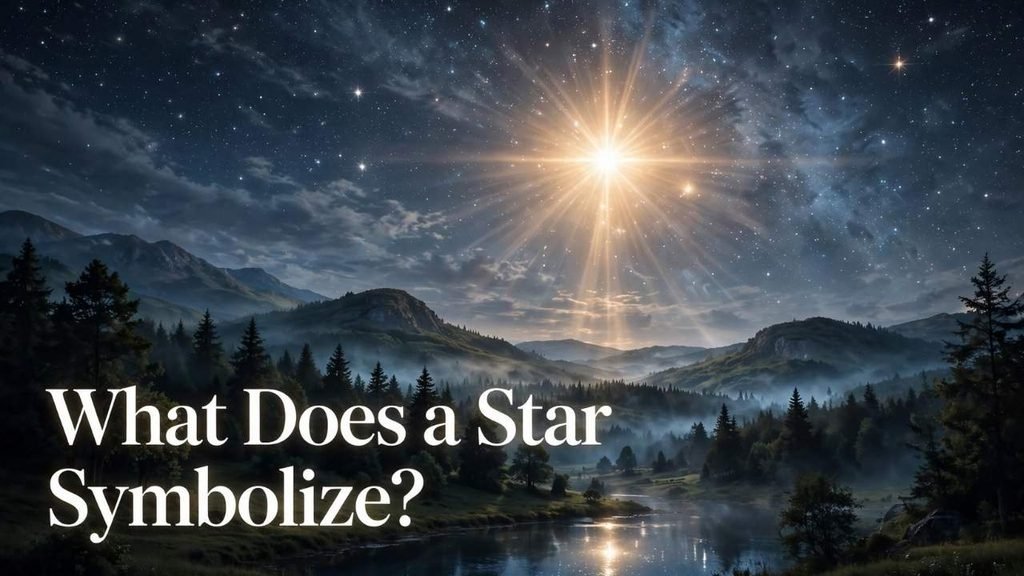
A star can symbolize many things, but people often connect it with hope, guidance, dreams, and inspiration. When a person faces a hard time, a bright star can represent hope and remind them that better days can come.
The star symbol meaning can also point to direction because people once used stars to guide their journeys. For this reason, a star may represent finding your path when life feels unclear.
Stars can also symbolize success, achievement, and ambition. People often use stars to praise someone who performs well or reaches an important goal.
In spiritual settings, the symbolic meaning of a star may include wisdom, divine guidance, spiritual growth, and a connection with something greater. Overall, the meaning depends on the context, culture, beliefs, and personal experience of the person viewing the star.
The Most Common Meanings of a Star
The meaning of a star can change from one situation to another, but several ideas appear again and again. First, stars often represent hope, especially during difficult periods. They can also symbolize guidance and direction, much like a guiding light that helps someone move forward.
Many people connect stars with dreams and ambition because the phrase “reach for the stars” encourages people to aim high.
A star may also represent destiny, purpose, and personal success. Some traditions view stars as signs of spiritual wisdom or divine connection. Others see them as symbols of protection, inspiration, and transformation.
In modern life, people also use stars to show excellence, beauty, or special status. These meanings explain why the star remains one of the most popular symbols across cultures and generations.
Spiritual Meaning of the Star
The spiritual meaning of a star often relates to light, wisdom, hope, and divine guidance. Many spiritual traditions view stars as reminders that something greater exists beyond everyday life.
Their light can represent enlightenment, inner wisdom, or a growing awareness of one’s true path. For some people, seeing a star during a difficult moment can feel like a message of comfort and hope.
Stars can also represent spiritual awakening, higher purpose, and personal growth. Their place in the vast night sky may remind us to look beyond our immediate problems and think about the bigger picture.
The spiritual symbolism of stars can also suggest a connection with the universe or the divine. However, people interpret these signs differently. A star may hold a deeply personal meaning based on someone’s beliefs, experiences, and emotional connection.
Are Stars Considered Spiritual Signs?
Many people consider stars spiritual signs, especially when they notice one during an important or emotional moment. Some believe a star can offer spiritual guidance, reassurance, or a reminder to trust their life path.
Others connect stars with divine presence, angels, ancestors, or the universe. These beliefs appear in many cultures and spiritual traditions, although they do not all interpret stars in the same way.
A bright star may symbolize hope and encouragement, while a special star may remind someone of a loved one or an important life event. Some people also see repeated star images as meaningful signs during periods of change.
From a spiritual view, the star spiritual meaning often depends on the person’s beliefs and circumstances. Rather than having one universal message, a star can become a personal symbol of faith, direction, peace, or inner wisdom.
Why Do Stars Symbolize Hope and Guidance?
Stars symbolize hope and guidance because they shine in the darkness. For centuries, people have looked at the night sky when they needed direction or wanted to understand their place in the world.
Even when everything around them looked dark, stars provided small points of light. This simple image helped create the idea of a star as a symbol of hope.
Stars also played an important role in navigation. Travelers and sailors used visible stars to help them understand direction and plan their journeys. The North Star, in particular, became famous as a reliable guide in the northern sky.
Because of this history, stars can represent finding direction, staying on the right path, and trusting your journey. Today, people still use star imagery to express hope, encouragement, and the belief that light can appear even during difficult times.
Common Symbolic Meanings of a Star
People use stars to express many powerful ideas.
- Hope: A star can remind people that difficult times will not last forever.
- Guidance: Stars can represent direction when someone feels lost or uncertain.
- Dreams: They often connect with wishes, goals, and big dreams.
- Ambition: Stars can encourage people to aim higher and work toward success.
- Destiny: Some traditions connect stars with fate, purpose, and a person’s life path.
- Spirituality: Stars may represent divine connection, awakening, and higher wisdom.
- Protection: Some cultures use star symbols as signs of safety and protection.
- Achievement: A star can show excellence, success, or recognition.
- Inspiration: Stars can encourage creativity, courage, and positive thinking.
- Transformation: Their light can symbolize growth, change, and a new beginning.
Together, these meanings explain why star symbolism remains powerful across cultures.
Star Symbolism Across Different Cultures
The symbolism of stars appears in cultures around the world. Ancient people often looked to the sky to understand nature, time, seasons, and their place in the world. As a result, stars became linked with gods, ancestors, destiny, protection, and guidance. Different cultures created their own stories around stars, but many shared the idea that the sky held important meaning.
Ancient civilizations such as Egypt and Mesopotamia connected stars with religion and the movements of heavenly bodies. Greek and Roman traditions also used stars in myths and stories about gods and heroes.
In many Indigenous traditions, people connected the night sky with ancestors, nature, stories, and navigation. Eastern traditions also developed rich ideas about stars, planets, and celestial patterns. These different beliefs show that a star does not carry only one meaning. Its cultural meaning depends strongly on history, tradition, and local beliefs.
Ancient Civilizations and Star Symbolism
Ancient civilizations gave stars a special place in religion, stories, and daily life. In ancient Egypt, people connected certain stars with gods, the afterlife, and the journey of the soul.
Egyptians also watched the sky to understand seasons and important events. In Mesopotamia, people studied stars and planets closely and connected celestial movements with divine messages and earthly events.
Ancient Greeks used stars in myths about gods, heroes, and creatures. Some stories explained how famous figures became constellations in the night sky. These traditions helped create a lasting connection between stars and fate, immortality, and divine power.
Stars also helped ancient travelers and sailors find their way. Because of these uses, ancient star symbolism often combined spiritual meaning with practical guidance. The sky became both a source of wonder and a guide for human life.
Star Symbolism in Mythology and Folklore
Mythology and folklore often use stars to explain life, death, destiny, love, and transformation. Many old stories describe people, heroes, or animals becoming stars after death or through the actions of gods.
These stories helped communities understand the mysterious night sky and gave familiar shapes and patterns special meaning.
Stars also appear in folk stories as signs of good luck, protection, wishes, and future events. Some traditions describe stars as homes or resting places for ancestors, while others connect them with gods or powerful spirits.
The idea of making a wish when seeing a shooting star also grew from this long history of giving celestial events special meaning. Although these stories differ across cultures, they often treat stars as something more than distant lights. They connect the sky with human hopes, fears, dreams, and the mystery of life.
Eastern Traditions and the Meaning of Stars
Eastern traditions have developed many ways to understand stars and other celestial bodies. In Chinese traditions, people historically studied the sky to understand time, seasons, and signs connected with earthly events.
Certain stars and constellations carried links to rulers, stories, and spiritual ideas. Hindu traditions also give important places to stars and constellations, especially through Jyotisha, the traditional system of Indian astrology.
In other Eastern traditions, people connect the night sky with balance, wisdom, spiritual order, and the larger universe. Stars can appear in stories, religious art, astrology, and traditional beliefs.
Their meaning may involve destiny, personal character, or cosmic harmony. These traditions show that star symbolism can combine spiritual beliefs with observations of nature. Instead of treating stars only as decorations, many Eastern cultures have viewed them as meaningful parts of a much larger cosmic pattern.
Religious Meaning of Stars
Stars hold important meanings in several religions. In Christianity, the Star of Bethlehem represents the birth of Jesus and the guidance that led the Magi toward him.
The Bible also uses star imagery to discuss prophecy, divine signs, rulers, and spiritual light. In Judaism, the Star of David became an important Jewish symbol, although its historical development differs from the biblical star imagery found in scripture.
Islamic cultures have also used stars in art, architecture, and symbolism, often alongside the crescent. Beyond these traditions, stars appear in many religious and spiritual systems as signs of divine guidance, creation, hope, and heavenly order.
The religious meaning of stars depends on the specific faith and tradition. Therefore, people should not assume that every star symbol carries the same religious message. Its meaning comes from its history, use, and spiritual context.
What Does the Star of Bethlehem Symbolize?
The Star of Bethlehem holds an important place in Christian tradition. According to the Gospel of Matthew, the star guided the Magi toward Jesus after his birth. Because of this story, the star became a strong symbol of divine guidance, hope, revelation, and faith. It represents a heavenly sign that helped people recognize an important event.
For many Christians, the Star of Bethlehem also symbolizes Jesus as a source of spiritual light. It reminds believers that faith can guide them through uncertain times. The star has also become a popular Christmas symbol and often appears in decorations, artwork, cards, and nativity scenes.
Its meaning goes beyond a bright object in the sky. The symbolic meaning of the Star of Bethlehem centers on guidance, divine purpose, spiritual hope, and the arrival of something deeply meaningful.
What Does a Shooting Star Symbolize?
A shooting star often symbolizes wishes, sudden change, opportunity, and hope. Technically, a shooting star is usually a meteor that creates a bright streak as it enters Earth’s atmosphere. However, people have given this brief event a much deeper meaning throughout history.
Many people connect shooting stars with good luck and new possibilities. Seeing one can feel special because the moment lasts only a short time.
This short appearance can remind us to notice important moments instead of taking them for granted. A shooting star may also represent transformation, personal change, or an unexpected opportunity.
In spiritual beliefs, people may view a shooting star as a sign of encouragement or divine guidance. Its meaning depends on personal beliefs, but the event often creates feelings of wonder, hope, excitement, and inspiration.
Why Do People Make Wishes on Shooting Stars?
People make wishes on shooting stars because many cultures have connected unusual events in the sky with luck, destiny, and divine signs. Since a shooting star appears suddenly and disappears quickly, people often treat the moment as a rare opportunity to express a hope or desire.
The tradition also connects with the popular idea of “wish upon a star.” A person may make a wish because the star represents hope and the possibility of something better. The act can also encourage people to think about their dreams, goals, and deepest desires.
Even when someone does not believe that a shooting star can make a wish come true, the tradition can still feel meaningful. It creates a small moment of reflection and optimism. In this way, shooting stars continue to symbolize hope, possibility, dreams, and positive change.
Star Symbolism in Dreams
The symbolism of stars in dreams can carry many meanings, depending on the dream and the emotions you experience. A bright star may represent hope, inspiration, success, or guidance.
If you see many stars across a clear sky, the dream may reflect feelings of wonder, possibility, or a desire for a better future.
A shooting or falling star may suggest a sudden change, a wish, or an opportunity that may not last long. Some people connect a distant star with an important dream, goal, or person who feels far away. However, dream meanings do not follow one fixed rule. Your feelings and personal experiences matter.
Instead of asking only what a star means in dreams, consider what the star meant to you. Your emotions can provide an important clue when exploring star symbolism in dreams.
What Does a Star Symbolize in Love?
In love and relationships, a star can symbolize hope, admiration, lasting connection, and shared dreams. Someone may describe a loved one as a star because that person brings light, comfort, or inspiration into their life.
For couples, stars can also represent the idea of building a future together and following the same path.
The star meaning in love can also connect with soulmate beliefs and the feeling that two people share a special bond. A star may represent a loved one who has passed away, making it a symbol of remembrance and emotional connection.
Romantic art and jewelry often use stars to express these ideas. A star can remind someone of a special person, meaningful memory, or shared moment. Overall, star symbolism in love often focuses on connection, hope, admiration, loyalty, and dreams that two people share.
What Do Stars Represent in Personal Growth?
Stars can represent personal growth, self-discovery, courage, and progress. Their light can remind people that growth often happens slowly. Just as stars remain visible even when the night looks dark, they can symbolize the inner strength that helps a person continue during difficult periods.
The symbolic meaning of a star can also connect with finding your life purpose. When someone sets a new goal, changes direction, or learns from a difficult experience, a star may represent the hope of becoming a stronger version of themselves. It can also symbolize spiritual development and inner wisdom.
Many people use star images as reminders to keep moving forward. The phrase “reach for the stars” captures this idea well. It encourages people to dream bigger, trust their abilities, and work toward meaningful goals. In this sense, stars can represent growth, ambition, resilience, and a new beginning.
Star Symbolism in Modern Life
Today, people use stars in many parts of everyday life. A star can show quality, success, popularity, or achievement. Restaurants and hotels often use star ratings to show their level of service.
In entertainment, stars can represent famous actors, performers, or celebrities. People also use stars on flags, clothing, jewelry, tattoos, logos, and social media designs.
A star can also express love, hope, identity, or personal beliefs. Some people wear star jewelry as a reminder of a goal or important person. Others choose star tattoos to represent guidance, freedom, dreams, or a new chapter in life.
Even the simple star symbol in digital communication can add a feeling of importance or excitement. Because people already connect stars with positive ideas, modern culture continues to use them in creative ways. The star symbol meaning remains flexible and changes with its context.
Can a Star Have a Negative Meaning?
Although stars usually represent hope and positive ideas, they can sometimes carry less positive meanings. A distant star may symbolize something that feels impossible to reach.
In this case, star symbolism can represent unfulfilled dreams, disappointment, or longing. A falling star may also suggest loss, change, or the end of something important, depending on the situation.
Stars can sometimes create feelings of loneliness or distance because they appear far away. In literature and art, writers may use stars to show separation, sadness, mortality, or a desire for something beyond reach.
However, a negative interpretation does not make the star a negative symbol overall. Context matters greatly. The same star can represent hope for one person and longing for another. Understanding the meaning behind the star symbol requires looking at the situation, emotions, culture, and personal experience connected with it.
Why Do Humans Find Stars So Symbolically Powerful?
Humans find stars powerful because stars combine beauty, mystery, distance, and light. People have looked at the night sky for thousands of years and wondered about their place in the universe.
Stars appear far away, yet their light reaches us, which creates a natural image of connection between something distant and something close.
Stars also helped people navigate, track seasons, tell stories, and create calendars. These practical uses strengthened their connection with guidance and direction.
At the same time, religious traditions and myths gave stars deeper meanings related to destiny, gods, ancestors, and spiritual life.
Today, stars still inspire artists, writers, dreamers, and everyday people. They can represent hope during darkness, dreams beyond our reach, and guidance during uncertain times. This combination of practical history and emotional meaning explains why star symbolism remains powerful across generations.
Frequently Asked Questions About Star Symbolism
What is the main symbolism of a star?
The main symbolism of the star includes hope, guidance, dreams, inspiration, achievement, destiny, and spirituality. The exact meaning depends on the context.
What does a star symbolize spiritually?
Spiritually, a star may symbolize divine guidance, enlightenment, inner wisdom, spiritual awakening, and a higher purpose. Different beliefs may give stars different meanings.
What does a shooting star symbolize?
A shooting star commonly represents wishes, hope, good luck, opportunity, and sudden change. Many people connect it with dreams and new possibilities.
What does the North Star symbolize?
The North Star often symbolizes guidance, direction, stability, and finding your way through uncertain situations.
What does a star symbolize in love?
In love, a star can represent admiration, connection, shared dreams, loyalty, remembrance, and hope.
What does a star symbolize in dreams?
Stars in dreams may represent hope, goals, inspiration, success, or guidance. Your emotions and personal experiences can change the interpretation.
What does the Star of Bethlehem symbolize?
The Star of Bethlehem symbolizes divine guidance, faith, hope, and the birth of Jesus in Christian tradition.
Can star symbolism have a negative meaning?
Yes. In some situations, a star can represent distance, longing, disappointment, unreachable dreams, or loss. Its meaning depends on the context.
Conclusion
The symbolism of the star reaches far beyond its beauty in the night sky. Across cultures, religions, and personal experiences, stars have represented hope, guidance, dreams, spirituality, love, success, and personal growth.
Whether you see a star as a sign of divine guidance, a reminder to follow your dreams, or a symbol of someone special, its meaning can feel deeply personal. From the Star of Bethlehem and the North Star to shooting stars and modern star symbols, each form carries its own message.
Ultimately, what a star symbolizes depends on its context and the meaning you give it. A simple star can remind us to stay hopeful, trust our path, and keep looking toward the light even when life feels dark.