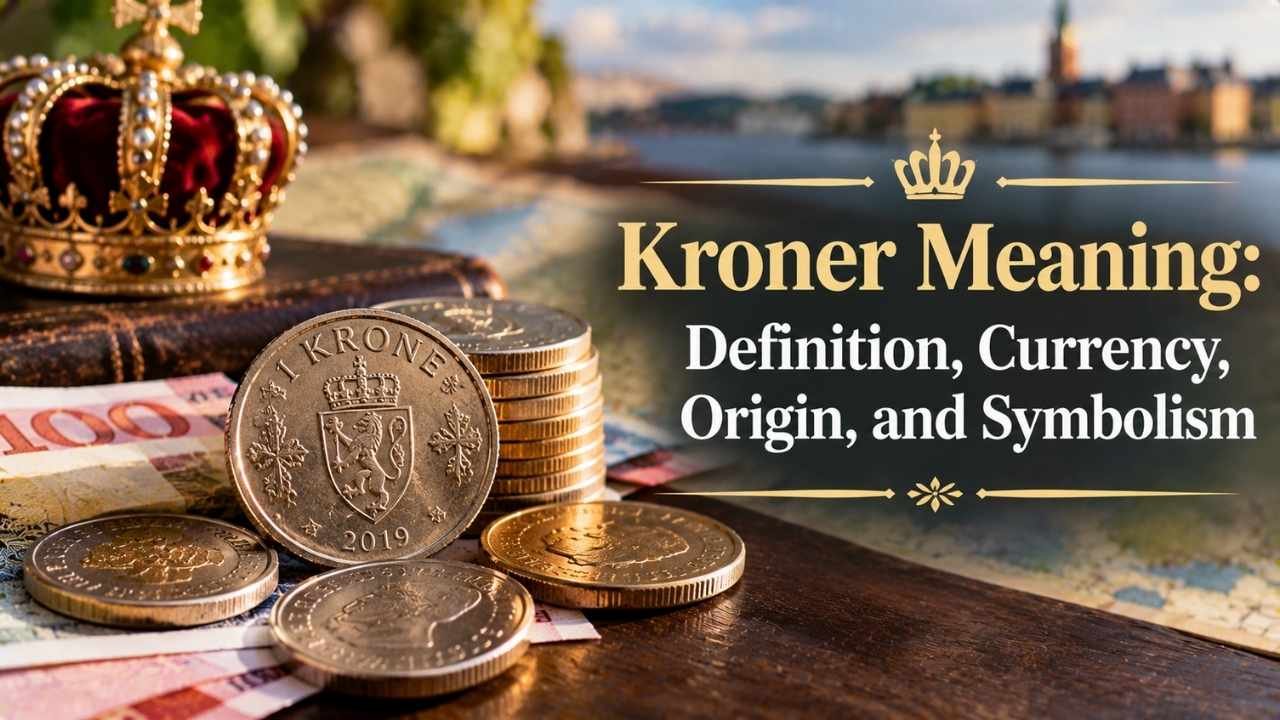
The Kroner meaning can seem confusing because the term relates to different Nordic currencies. Kroner is generally the plural form of krone, a currency unit used mainly in Denmark and Norway. Similar terms, such as krona and kronor, belong to other Nordic currencies.
Understanding these differences makes the word easier to recognize. In this guide, we explore the Kroner meaning, currency use, origin, history, pronunciation, symbolism, and everyday examples. We also explain the differences between krone, kroner, krona, and kronor in simple language.
Quick Answer
Kroner is the plural form of krone, a currency unit used in Denmark and Norway. The word connects historically to “crown” and reflects Nordic currency traditions. One unit is a krone, while several units are kroner. The exact currency depends on the country, such as Danish kroner or Norwegian kroner.
What Does Kroner Mean?
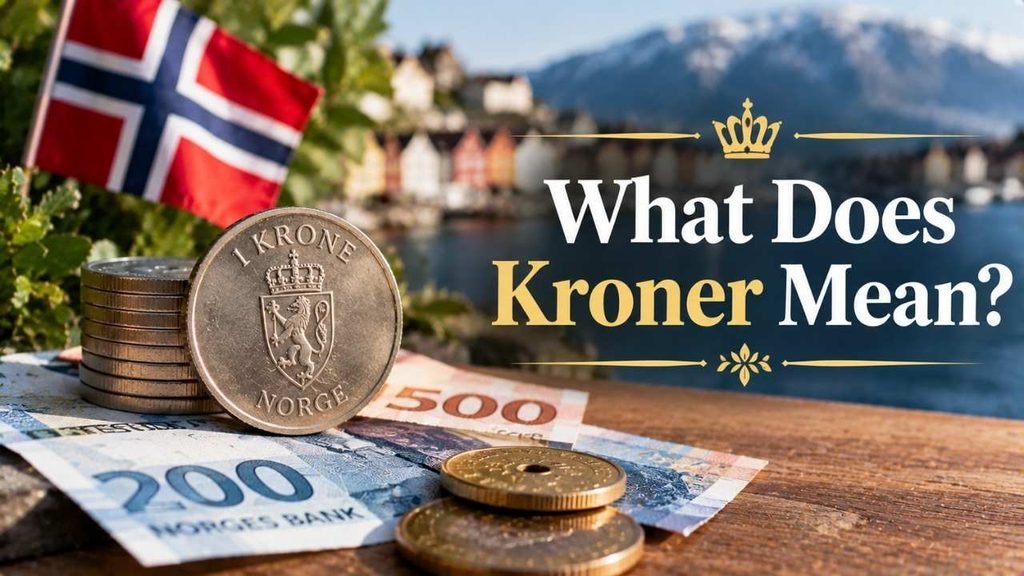
The basic Kroner meaning is simple: kroner is the plural form of krone. If you have one unit, you can say one krone. If you have several units, you can say ten kroner or one hundred kroner. You may see this word on price tags, travel websites, bank documents, and currency exchange pages. The term does not describe one universal currency.
Danish kroner belong to Denmark, while Norwegian kroner belong to Norway. These currencies also have different codes: DKK for the Danish krone and NOK for the Norwegian krone. So, when someone asks, “What does kroner mean in English?”, the simple answer is that it means multiple units of krone. The country provides the important context.
Is Kroner a Currency or a Plural Word?
People often ask, “Is kroner a currency?” The answer needs a small explanation. Kroner is a plural word, while krone is the singular currency unit. However, people often use “kroner” when talking about the money of a country because they usually discuss amounts greater than one unit. For example, one krone refers to one unit, while 100 kroner refers to 100 units.
You can compare this with other currencies where the singular and plural forms differ. The word also does not identify one single currency. Danish kroner and Norwegian kroner are separate currencies. Therefore, saying only “kroner” may leave the country unclear. This distinction helps explain why kroner meaning can change slightly depending on the context in which you see the word.
Krone vs. Kroner: What Is the Difference?
The difference between krone and kroner is mainly grammatical. Krone is singular, while kroner is plural. You use “krone” when you mean one currency unit and “kroner” when you mean two or more. For example, you might say “The price is one krone” for a single unit. If the price is 50 units, you would say “The price is 50 kroner.” This simple pattern explains the basic krone vs. kroner difference.
The word krone appears in both Danish and Norwegian currency names, although the currencies themselves remain separate. The plural form kroner follows the same basic language pattern. Understanding this difference also helps you avoid a common mistake: treating kroner as though it were the singular name of one specific currency.
Which Countries Use Krone or Kroner?
The word krone and its plural kroner mainly appear in the currencies of Denmark and Norway. Denmark uses the Danish krone, with the currency code DKK, while Norway uses the Norwegian krone, with the code NOK. You may also encounter similar currency names elsewhere in the Nordic region. Sweden uses the Swedish krona, with kronor as its plural form. Iceland uses the Icelandic króna, which has its own plural form in Icelandic.
This makes country context important whenever you see kroner. A travel guide that mentions 500 kroner may need to tell you whether it means Danish or Norwegian money. So, the answer to “What countries use kroner?” is mainly Denmark and Norway, while related forms appear in other Nordic countries.
Krone, Kroner, Krona, and Kronor Explained
The words krone, kroner, krona, and kronor look almost identical, but they do not all belong to the same language or currency. Krone is the singular form used in Danish and Norwegian. Kroner is its plural form. Sweden uses krona as the singular form and kronor as the plural.
Iceland uses króna, which comes from the same broader crown-related language family but has different local forms. These similarities come from shared Nordic language and currency history. However, you should not assume that kroner and kronor are interchangeable.
They belong to different languages and currencies. Knowing this distinction can prevent confusion when comparing Danish kroner, Norwegian kroner, Swedish kronor, and Icelandic króna. The spelling provides an important clue about the country and language involved.
What Is the Difference Between Danish and Norwegian Kroner?
Although both currencies use the name krone and the plural kroner, Danish and Norwegian kroner are different currencies. Denmark uses the Danish krone (DKK), while Norway uses the Norwegian krone (NOK). Their values, coins, banknotes, and monetary systems differ.
Therefore, saying “100 kroner” without naming the country does not always provide enough information. One hundred Danish kroner and 100 Norwegian kroner represent different amounts when converted into another currency. This distinction matters especially when you travel, shop online, or check an exchange rate.
A website may use “kroner” while the surrounding country information tells you which currency it means. So, Danish kroner and Norwegian kroner share a name but are not the same money. Always check the country or currency code before comparing their value.
Where Does the Word Kroner Come From?
The word kroner comes from krone, which has a long connection with the word “crown.” The name reflects a historical tradition in which crowns represented rulers, royal authority, and national power. The English word “crown” and the Nordic word krone share a deeper historical connection. The word ultimately traces back to older European language forms associated with the idea of a crown.
This origin helps explain why a currency received a name connected with royalty. Historically, European rulers often placed their images, symbols, or crowns on coins. A crown therefore became a natural symbol for authority and money. Today, however, kroner simply functions as a currency term in normal use. Its historical connection to a crown explains the word’s origin, but it does not mean that modern kroner literally represents a physical crown.
Why Is the Currency Called Krone?
The name krone relates to the word crown, which historically represented royalty and authority. European currencies have often used names connected with rulers, valuable objects, or important national symbols. The crown carried strong historical meaning, so it became associated with money in several European regions.
This connection also appears in older currency names such as the British crown. Nordic countries adopted related crown-based names for their own monetary systems. The exact historical development differs between countries, so we should not treat every crown-named currency as identical.
Still, the shared word family helps explain why krone, kroner, krona, and kronor sound so similar. Today, the name mainly identifies currency units. The historical crown meaning gives us useful background, but everyday users normally understand kroner simply as money rather than as a symbol of royalty.
What Does Kroner Symbolize?
The literal meaning of kroner refers to currency, but its word origin creates several possible symbolic connections. Because krone relates to “crown,” people may associate the term with ideas such as royalty, authority, leadership, status, value, and tradition.
A crown has historically represented power and sovereignty. It can also suggest responsibility because rulers carried duties along with their position. In a broader symbolic sense, the crown can represent achievement, recognition, or high status. However, these ideas describe symbolic associations, not the dictionary definition of kroner.
Modern kroner simply refers to currency units. If you are researching kroner symbolism, it is useful to separate the word’s historical origin from personal interpretation. The crown connection provides the historical foundation, while ideas such as authority and value come from the wider symbolism of crowns.
Kroner Meaning in Different Contexts
You can encounter kroner in many everyday situations. A traveler may see prices listed in kroner at a hotel, restaurant, store, or tourist attraction. A shopper may find kroner on an online store serving customers in Denmark or Norway. Financial websites may mention kroner when discussing currency exchange or international markets.
The basic meaning remains the same: kroner refers to multiple units of krone. The context tells you which country’s currency the writer means. For example, a Norwegian travel guide may discuss prices in Norwegian kroner, while a Danish website may list costs in Danish kroner.
News reports may simply say “kroner” when the country is already clear from the surrounding story. This makes context especially important when interpreting the meaning of kroner in English, travel content, banking information, and everyday conversations.
How to Pronounce Krone and Kroner
Many English speakers wonder how to pronounce krone and kroner because the spelling differs from familiar English words. The pronunciation can also vary slightly depending on the language and country. In English, dictionaries commonly provide an English pronunciation for krone, while native Danish and Norwegian speakers pronounce the word according to their own languages. The plural kroner follows the pronunciation patterns of those languages as well.
If you are speaking English, the most important goal is clear communication rather than copying a perfect local accent. When discussing a currency while traveling, you can also use the country’s name to avoid confusion. For example, saying “Norwegian kroner” clearly tells your listener which currency you mean. Learning the pronunciation is useful, but understanding the meaning and country context matters even more.
How Is Kroner Used in a Sentence?
The word kroner usually appears when someone talks about an amount of money. For example, you might read, “The ticket costs 200 kroner.” You could also see, “I exchanged 500 kroner before my trip.”
Other examples include:
- “The meal cost 150 kroner.”
- “The hotel charged 1,000 kroner per night.”
- “She saved several thousand kroner.”
- “The price was listed in Norwegian kroner.”
These examples show how naturally the word works as a plural currency term. You generally use krone for one unit and kroner for more than one.
Using the word correctly becomes easy once you remember the basic rule: one krone, two or more kroner. The country name can then clarify whether you mean Danish or Norwegian currency.
Common Mistakes People Make About Kroner
One common mistake is assuming that kroner represents one universal currency. It does not. Denmark and Norway have separate currencies, even though both use the terms krone and kroner. Another mistake involves Sweden. Sweden does not use “kroner” as its standard currency form. It uses krona in the singular and kronor in the plural. This difference becomes important when comparing Nordic currencies.
People also sometimes think that kroner literally means crown. The word has a historical connection to “crown,” but its modern meaning refers to currency units. Finally, some readers confuse krone and kroner. Remembering the simple singular/plural rule solves this problem: krone means one unit, while kroner means multiple units.
Does Kroner Have a Spiritual or Deeper Meaning?
The established meaning of kroner is linguistic and monetary, not spiritual. However, people who study symbolism may explore deeper ideas through its connection with the crown. Across many cultures, a crown can symbolize authority, achievement, leadership, dignity, sovereignty, and responsibility.
These ideas can inspire personal or spiritual interpretations. Someone might view a crown as a reminder to recognize personal worth, accept responsibility, or lead with confidence. These interpretations should remain separate from the factual definition of kroner. Dictionaries and currency systems define krone and kroner as monetary terms.
Therefore, if you search for the spiritual meaning of kroner, you are entering the area of symbolic interpretation rather than literal language. The strongest historical connection comes from the word’s relationship with crown, while the deeper meaning depends on the context and the person interpreting the symbol.
FAQs
What does kroner mean?
Kroner is the plural form of krone. It commonly refers to currency units used in Denmark and Norway.
Is kroner singular or plural?
Kroner is plural. The singular form is krone.
What countries use kroner?
Denmark and Norway use currencies called krone, with kroner as the plural form.
Is kroner the same as krona?
No. Kroner is used with Danish and Norwegian krone, while krona is the Swedish singular form.
Does kroner mean crown?
The word krone has a historical connection to “crown,” but kroner now primarily means multiple currency units.
Conclusion
The Kroner meaning becomes simple once you understand its language and currency context. Kroner is the plural form of krone, and Denmark and Norway use separate currencies with this name. Denmark uses DKK, while Norway uses NOK. The word also has a historical connection with “crown,” which explains its relationship with ideas such as royalty, authority, value, and tradition. However, modern kroner simply refers to money.
It is also important to distinguish krone, kroner, krona, and kronor, because these forms belong to different Nordic languages and currencies. Whether you see kroner while traveling, shopping, reading financial news, or exploring symbolism, the surrounding context will usually tell you exactly what it means.
1 thought on “Kroner Meaning: Definition, Currency, Origin, and Symbolism”